

By: Angela Currie, Ph.D.
Pediatric Neuropsychologist, NESCA
Director of Training and New Hampshire Operations
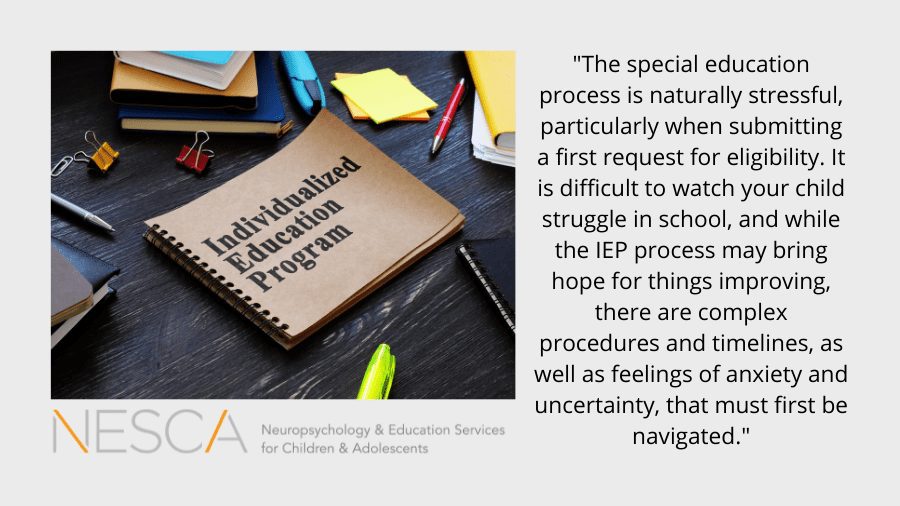
The special education process is naturally stressful, particularly when submitting a first request for eligibility. It is difficult to watch your child struggle in school, and while the IEP process may bring hope for things improving, there are complex procedures and timelines, as well as feelings of anxiety and uncertainty, that must first be navigated. Luckily, there are some things that families can do to help manage the stress that comes with the IEP eligibility process:
- Acknowledge from the onset that the process will be stressful and that stress is okay. Stress is telling you that something is important and requires your attention. Try to accept stress as part of the process and use that to help prepare yourself.
- Build a team. Allow yourself to just be the caregiver, and find professionals who can take on other duties. This may include hiring an educational advocate or attorney who can help you understand special education laws as well as advocate for your child’s needs at meetings. This may also include seeking a private evaluation to obtain an expert opinion on your child’s needs and inviting this individual to participate in the meeting. The goal is to divide responsibilities, focus on your child, and speak to your concerns as the caregiver.
- If you had an evaluation and are working through a new diagnosis, take in information at a pace that you can handle. Ask your evaluator for clarifying information when needed, and try to reduce your Googling and online research. Do not get yourself stuck in a rabbit hole of online information that may or may not pertain to your child. If you feel uncertain about things, use your team and ask questions.
- Maintain effective communication with your IEP team. Know your goal for each meeting and plan your input ahead of time. Be concise but include observations or history to support your point, and state your specific goals for each meeting.
- Manage your expectations. Concerns and requests may not be entirely resolved within one meeting, and there may be many steps you have to go through before a plan is in place.
- For children who “fly under the radar” at school, take some basic notes of what you observe at home, such as difficulty with homework, “meltdowns” after school, etc., which you can share with the team. That said, only take these notes for a manageable time frame (e.g., two weeks), allowing you to maintain your sanity.
- Lastly, engage in self-care. While this may sound cliché, it is indeed important to take time to yourself and do activities that bring you some peace and enjoyment while navigating through these stressful procedures.
About the Author
 Londonderry, NH office. She specializes in the evaluation of anxious children and teens, working to tease apart the various factors lending to their stress, such as underlying learning, attentional, or emotional challenges. She particularly enjoys working with the seemingly “unmotivated” child, as well as children who have “flown under the radar” for years due to their desire to succeed.
To book an evaluation with Dr. Currie or one of our many other expert neuropsychologists, complete NESCA’s online intake form. Indicate whether you are seeking an “evaluation” or “consultation” and your preferred clinician in the referral line.
Neuropsychology & Education Services for Children & Adolescents (NESCA) is a pediatric neuropsychology practice and integrative treatment center with offices in Londonderry, NH, Plainville, MA, and Newton, MA serving clients from preschool through young adulthood and their families. For more information, please email info@nesca-newton.com or call (603) 818-8526.

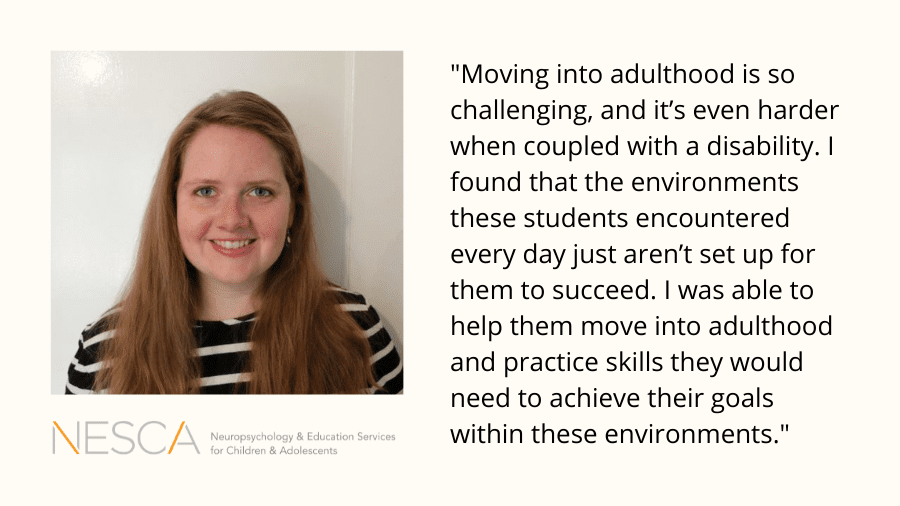
 meaningful skills in order to reach their goals. She has spent the majority of her career working in a private school for students with ASD. She has also spent some time working in an inpatient mental health setting. Lyndsay uses occupation-based interventions and strategies to develop life skills, executive functioning, and emotional regulation. While completely her doctoral degree at MGH Institute of Health Professions, Lyndsay worked with the Boston Center for Independent Living to evaluate transition age services. She uses the results from her research to deliver services in a way that is most beneficial for clients. Specifically, she focuses on hands-on, occupation-based learning that is tailored the client’s goals and interests.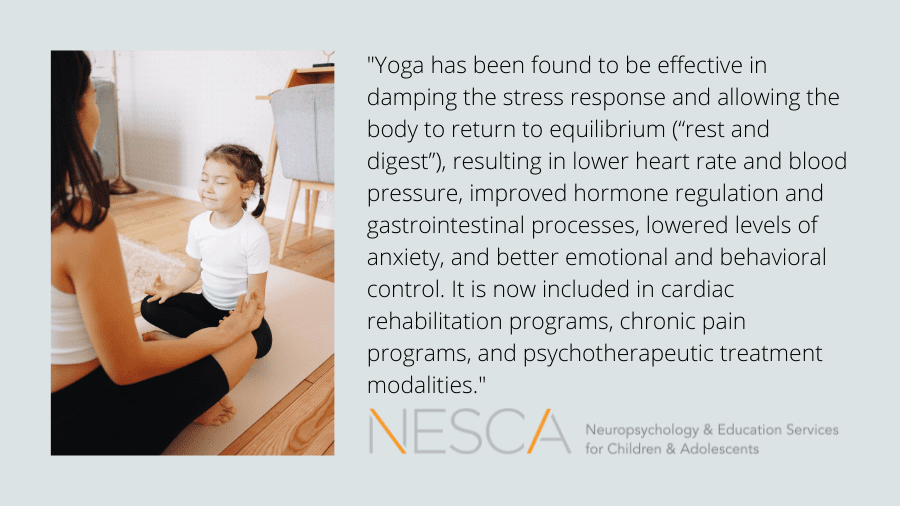
 for something that “would get me back into movement.” She quickly fell in love with yoga and completed her 200-hour Yoga Teacher Training. In the meantime, she also completed her master’s degree in Marriage and Family Studies at Salem State University. With this combination of expertise, she is able to help children and adolescents become more in touch with their bodies and find their words through movement, breathing, and relaxation.




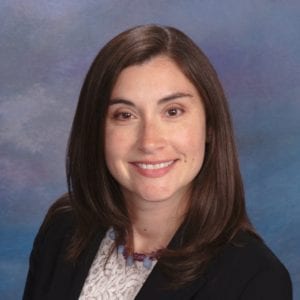 unique pattern of strengths and weaknesses to best formulate a plan for intervention and success. With experiences providing therapy and assessments, Dr. Creedon bridges the gap between testing data and therapeutic services to develop a clear roadmap for change and deeper of understanding of individual needs.
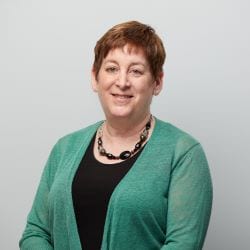

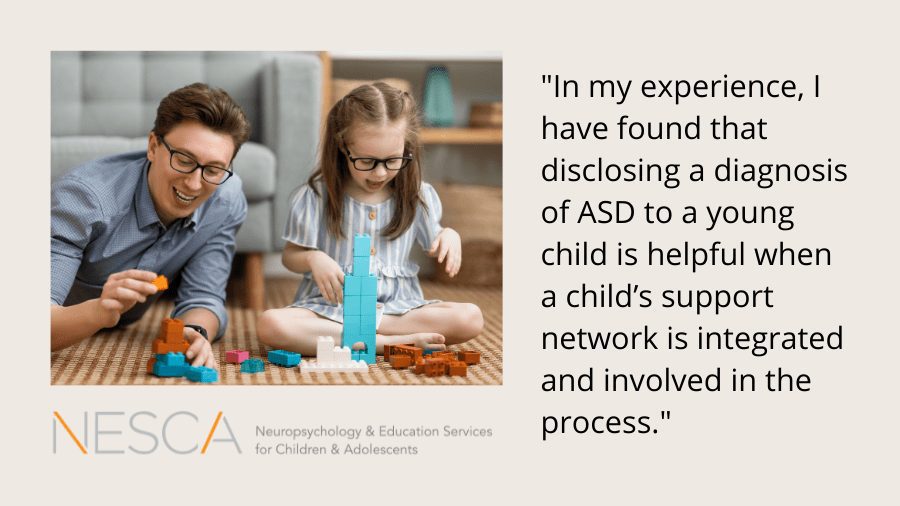
 complex, inter-related needs, with a particular emphasis on identifying co-occurring neurodevelopmental and psychiatric challenges. She specializes in the evaluation of developmental disabilities including autism spectrum disorder and social-emotional difficulties stemming from mood, anxiety, attachment and trauma-related diagnoses. She often assesses children who have “unique learning styles” that can underlie deficits in problem-solving, emotion regulation, social skills and self-esteem.
Connect with Us