
NESCA’s Londonderry, NH location has immediate availability for neuropsychological evaluations. Our NH clinicians specialize in the following evaluations: Neuropsychological; Autism; and Emotional and Psychological, as well as Academic Achievement and Learning Disability Testing. Our NH clinicians also conduct evaluations for students who are at boarding schools, and two of our NH clinicians have PsyPACT authorization, allowing them to conduct evaluations out-of-state.

Visit www.nesca-newton.com/intake for more information or to book an evaluation.

Subscribe to NESCA Notes

The Value of Mulligans

By | NESCA Notes 2021

By:  Stephanie Monaghan-Blout, Psy.D.
Pediatric Neuropsychologist

Let’s face it – a lot of parenting involves socializing children whose brains are in the process of being built. This means:

  1. They do not yet have the cognitive capacity to understand the moral principles behind such behaviors as “sharing, “being nice” and “using our words.”
  2. They are in the process of learning how to inhibit the impulse to grab, say whatever one thinks and using physical force to get what one wants.

Behavioral reinforcement strategies (rewarding desirable behavior) can be quite effective as a socialization technique – but only if the strategy is keyed to both an understanding of the level of the child’s cognitive/moral development and their capacity for impulse control. All too often, the parent’s efforts to shape their child’s behavior run aground because of problems in assessing either (or both) of these areas. The concept of a “mulligan” can be a very useful in compensating for either child or parent error.

The term “mulligan” comes from the game of golf where it means getting an extra stroke after a poor shot. There are several stories about the origin of the term, but most involve a player named Mulligan who had been so rattled by a variety of events that he made a very poor shot on his first effort and claimed a “correction” – basically a do-over. This fits well with the dilemma presented to parents when a child has not been able to stick to an agreement, like “if you boys can work out your differences without verbal or physical fighting this morning, we will get some ice cream this afternoon.”

The first step in taking a mulligan, or correction do-over, always involves giving everybody involved some time to calm down, thus restoring the capacity for flexible thinking and problem solving. Once this is achieved, it is time to figure out where things broke down: was it overestimating the child’s capacity for controlling their impulses over time, in certain situations, or with certain people? Or was it because the child did not know how or why to take certain actions? If the problem involves impulse control, it will be up to the parent to restructure the situation in order to make it more realistically doable for the child or children – in other words, the parent takes a mulligan. For instance, s/he might say, “Look, this is not working out. I’m going to take a mulligan. Every 15 minutes that you guys can get along and work out your differences, I will give you a point. If you can get 3 points this morning, we will go for ice cream this afternoon.” Notice that this directive leaves some room for inevitable error, but still imposes reasonable expectations.

When the problem falls in the “how” or “why” category, parents also need to consider the child’s developmental status before engaging in problem solving. It is really important to appreciate that a child’s understanding of common conventions, like “sharing” and “fair.” In the egocentric and preconventional thinking of young children, “sharing” is too abstract of a concept and “fair” means “I get my way.” To speak about “taking turns,” make more sense to them. In the more conventional thinking of elementary school children, the key element in sharing is “fairness,” or, is the exchange equal? (In high school or college, some students will begin to struggle with the concept of equity, or how to allocate resources and opportunities in order to ensure an equal outcome, but this is a foreign thought to most children when it applies to their own resources, like candy or access to video games). Once the parent is clear about how the child is viewing the problem and where their strategies broke down, they can offer a chance for a mulligan while teaching more effective strategies than brute force or crying. Concrete aids, such as wind-up timers that show minutes, can help children understand the passing of time. Whimsical strategies, such as “shooting fingers” or “Rock, Paper, Scissors” are fun ways of determining who goes first or who gets to choose the video that also teach tenets of compromise and collaboration.


Resources:

https://www.golfdigest.com/story/did-you-know-where-did-the-term-mulligan-originate


About the Author:

Formerly an adolescent and family therapist, Dr. Stephanie Monaghan-Blout is a senior clinician who joined NESCA at its inception in 2007. Dr. Monaghan-Blout specializes in the assessment of clients with complex learning and emotional issues. She is proficient in the administration of psychological (projective) tests, as well as in neuropsychological testing. Her responsibilities at NESCA also include acting as Clinical Coordinator, overseeing psycho-educational and therapeutic services. She has a particular interest in working with adopted children and their families, as well as those impacted by traumatic experiences. She is a member of the Trauma and Learning Policy Initiative (TLPI) associated with Massachusetts Advocates for Children and the Harvard Law Clinic, and is working with that group on an interdisciplinary guide to trauma sensitive evaluations.

To book an evaluation with Dr. Monaghan-Blout or one of our many other expert neuropsychologists and transition specialists, complete NESCA’s online intake form.

Neuropsychology & Education Services for Children & Adolescents (NESCA) is a pediatric neuropsychology practice and integrative treatment center with offices in Newton, Massachusetts, Plainville, Massachusetts, and Londonderry, New Hampshire, serving clients from preschool through young adulthood and their families. For more information, please email info@nesca-newton.com or call 617-658-9800.

Sensory-friendly Sunscreen for Tactile-sensitive Kids

By | NESCA Notes 2021

By: Madelyn (Maddie) Girardi, OTD, OTR/L
Occupational Therapist, NESCA

Our Sense of Touch

Tactile processing is our ability to sense and interpret information from our environment through our sense of touch. Information from our tactile system allows us to gauge everyday sensations such as light touch, temperature, vibration, pressure, or pain.

Tactile Defensiveness

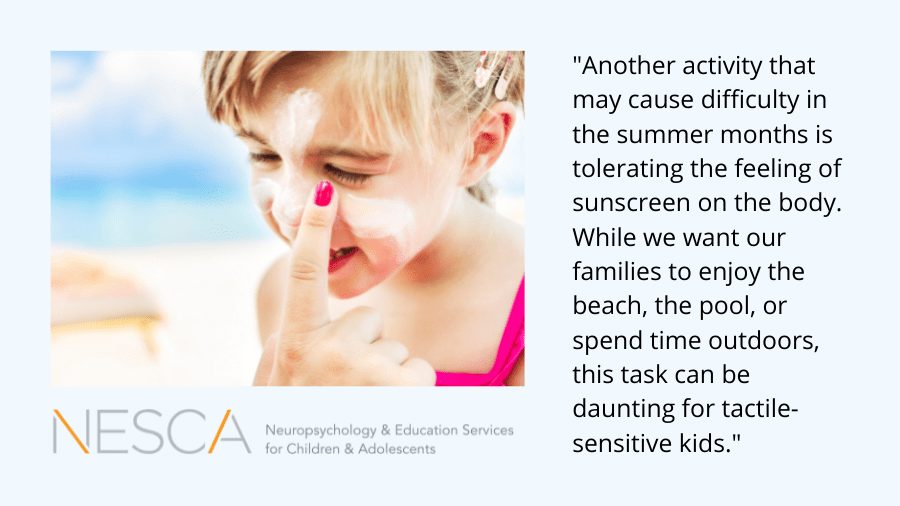
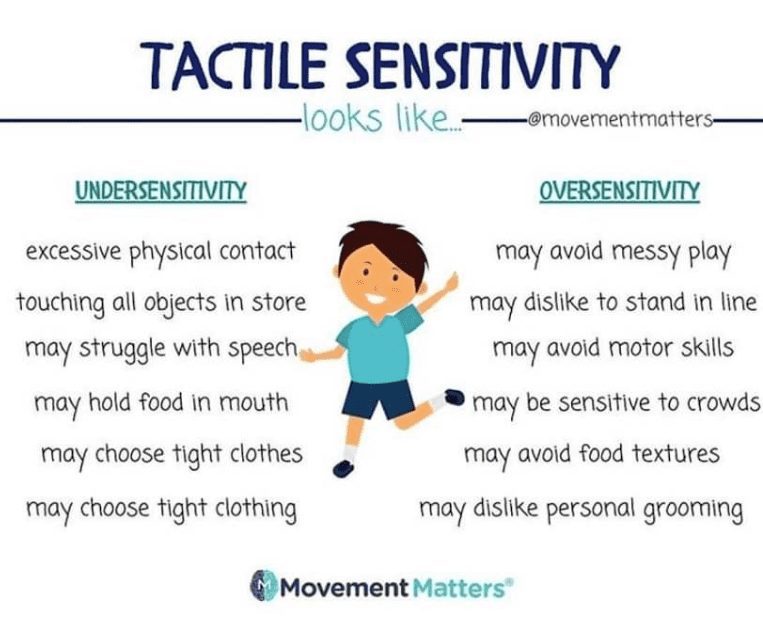
Tactile defensiveness is a term used to describe an individual who is hypersensitive to touch. As occupational therapists (OTs), this is something we come across often on our caseloads. Sensitivity to tactile stimuli can interfere greatly with a child’s functional, day-to-day activities. It can impact one’s ability to tolerate certain types of clothing, perform self-care tasks (bathing, toothbrushing, hair brushing), or eat a range of foods. Another activity that may cause difficulty in the summer months is tolerating the feeling of sunscreen on the body. While we want our families to enjoy the beach, the pool, or spend time outdoors, this task can be daunting for tactile-sensitive kids. The anticipation of this event alone may elicit an aversive response, or, in many cases, the child may begin avoiding the task altogether.

(Movement Matters, 2020).

The Role of OT

Occupational therapists help children and families participate in meaningful daily activities. When a child is sensitive to certain stimuli, the therapist will provide an environment where controlled and guided exposure can take place. This process allows for ongoing positive interaction with the medium, often through play-based activities. The therapist can help the family find alternative solutions and to identify positive coping mechanisms that allow the individual to be successful in the given task.

Tactile Defensiveness and the Beach

As a pediatric occupational therapist, a question that often comes up in the summer months is: “What do I do if my child is having trouble tolerating the feeling of sunscreen on his skin?” The first thing you can do is consider the sensory properties of the sunscreen. Is it lotion? Is it thick? Sticky? Clumpy? Smooth? Does it absorb quickly, or does it stay on the skin? Is it greasy? Does it have a certain smell to it? Stick, spray, and powder options are great alternatives for children who may be sensitive to some of the less desirable lotions. Here are some of the most recommended, sensory-friendly sunscreen options:

      Stick options

  • Neutrogena Wet Skin Kids Stick *
  • Neutrogena Dry Touch Ultra Sheer Stick *
  • Aveeno Baby Face stick sunscreen

      Spray options

  • Babo Botanicals Sheer Zinc Spray
  • Banana Boat Light as Air

      Powder-based options – primarily for the face

  • Brush on Block Translucent Mineral Powder Sunscreen
  • Sunforgettable Total Protection Brush-On Shield

      Lotions

  • Neutrogena Dry Touch Ultra Sheer *
  • Supergoop Unseen Sunscreen
  • Biore UV Aqua Rich Watery Essence

(Evolution, 2021; No Author, 2018).

Additional Recommendations

As an occupational therapist, I am always thinking of other ways to adapt activities to make them easier for my clients. Beyond changing the actual sunscreen, here are some more ways to help make protection from the sun easier for our kids.

  • Coolibar Clothing – Limit the amount of skin that is exposed directly to the sun using protective clothing. This brand offers sun protective clothing options in shirts, hats, bottoms, and swimwear.
  • Make it a routine! – Like any other daily activity, such as getting dressed or brushing teeth, make it a part of the day! This way, it is familiar and expected.
  • Make it fun! – Play a game or sing a song while applying sunscreen. Use a timer so that the child can know when the activity is going to end.
  • Involve the child in the process as much as possible – As appropriate, have the child help with putting on the sunscreen. Use a mirror so that the child can see what is going on.
  • Proprioceptive input – Providing proprioceptive input prior to sunscreen application can help to reduce touch sensitivity. This is the sensory input one receives from the movement and force of muscles and joints. Some examples include massage/deep pressure to applicable areas, any pushing/pulling movement, use of weighted items, digging in sand, animal crawls, or wheelbarrow walks. Have the child rub down arms, legs, and back with a towel before applying sunscreen.

References:

Evolution, M. (2021, May 26). Sunscreen Ideas for Tactile Defensive Kids. Mommy Evolution. https://mommyevolution.com/sunscreen-ideas-tactile-kids/

No Author. (2018, March 31). Autism Inclusivity [Facebook page]. Facebook. Retrieved August 6, 2021, from https://www.facebook.com/groups/autisminclusivity

Movement Matters. (2020, May 3). Occupational Therapy ABC. https://www.movementmatters.com/


About the Author
Madelyn (Maddie) Girardi is a Licensed Occupational Therapist in Massachusetts with experience in both school-based and outpatient pediatric settings. Maddie received her undergraduate degree in Exercise Science/Kinesiology at The College of Charleston in South Carolina and  earned her Doctorate degree in Occupational Therapy from The MGH Institute of Health Professions in Boston.

Maddie is a passionate therapist with professional interest in working with young children with neurodevelopmental disorders, fine and gross motor delays and Autism Spectrum Disorder (ASD).

To book an appointment or to learn more about NESCA’s Occupational Therapy Services, please fill out our online Intake Form, email info@nesca-newton.com or call 617-658-9800.


Neuropsychology & Education Services for Children & Adolescents (NESCA) is a pediatric neuropsychology practice and integrative treatment center with offices in Newton, Massachusetts, Plainville, Massachusetts, and Londonderry, New Hampshire, serving clients from preschool through young adulthood and their families. For more information, please email info@nesca-newton.com or call 617-658-9800.


The Relationship Between Dyslexia and Dyscalculia

By | NESCA Notes 2021

By: Alissa Talamo, PhD
Pediatric Neuropsychologist, NESCA

Reading disability (RD) and math disability (MD) are common developmental disorders that are defined by significant academic underachievement that is unexpected based on an individual’s age and development (e.g., American Psychiatric Association, 2000).”

Research has shown that children who struggle with learning to read often also struggle with math and understanding numbers. It is not uncommon for students to have both a reading disability (dyslexia) and a math disability, with this co-occurrence found at a rate of approximately 40% (2013, ncbi.nlm.nih.gov).

Dyscalculia is a learning disability that makes math challenging to process and understand, with these problems not explained by a lack of proper education, intellectual disabilities, or other conditions. At this time, the estimated prevalence of dyscalculia in school populations is 3 to 6 percent. There is no medication that treats dyslexia or dyscalculia; however, treating any co-occurring issues (e.g., AD/HD, Anxiety) can be helpful.

What are some signs of dyscalculia?

Elementary School Difficulties:

    • trouble learning and recalling number facts
    • trouble processing numbers and quantities, such as connecting a number to the quantity it represents (the number 2 to two books)
    • difficulty counting, backwards and forwards
    • difficulties recognizing quantities without counting
    • weak mental math and problem-solving
    • trouble making sense of money and estimating quantities
    • difficulty quickly identifying right and left
    • difficulty identifying signs like + –
    • trouble recognizing patterns and sequencing numbers
    • poor processing of graphs and charts
    • persistent finger-counting is typically linked to dyscalculia, especially for easy, frequently repeated calculations
    • lack of confidence in areas that require math

Adolescent Difficulties:

    • trouble applying math concepts to money
    • difficulty counting backward
    • slow to perform calculations
    • weak mental arithmetic
    • poor sense of estimation
    • high levels of math anxiety

Under the Individuals with Disabilities Education Act (IDEA), students diagnosed with a Specific Learning Disability (SLD) with impairment in math (i.e., dyscalculia) are eligible for special services in the classroom. In-school dyscalculia services and accommodations may include:

    • direct, specialized pull-out instruction to target core, foundational skills
    • extra time on assignments, quizzes, and tests
    • use of a calculator
    • modifying the task
    • breaking down complex problems into smaller steps

If you believe that your child may be experiencing difficulties in the area of math, one step is to determine the root of the difficulty. For example, does the student have an underlying learning disability or reduced self-regulation that may be negatively impacting their progress? Receiving a neuropsychological evaluation could be a useful tool in determining the appropriate supports and services to best help your child. If you are interested in learning more about NESCA’s Neuropsychological Evaluations, email: info@nesca-newton.com or complete our online intake form.

Sources:

https://www.ncbi.nlm.nih.gov/pmc/articles/PMC5987869/

https://www.understood.org/

https://safespot.org

https://www.additudemag.com/

https://dyslexiafoundation.org/


About the Author

With NESCA since its inception in 2007, Dr. Talamo had previously practiced for many years as a child and adolescent clinical psychologist before completing postdoctoral re-training in pediatric neuropsychology at the Children’s Evaluation Center.

After receiving her undergraduate degree from Columbia University, Dr. Talamo earned her doctorate in clinical health psychology from Ferkauf Graduate School of Psychology and the Albert Einstein College of Medicine at Yeshiva University.

She has given a number of presentations, most recently on “How to Recognize a Struggling Reader,” “Supporting Students with Working Memory Limitations,” (with Bonnie Singer, Ph.D., CCC-SLP of Architects for Learning), and “Executive Function in Elementary and Middle School Students.”

Dr. Talamo specializes in working with children and adolescents with language-based learning disabilities including dyslexia, attentional disorders, and emotional issues. She is also interested in working with highly gifted children.

Her professional memberships include MAGE (Massachusetts Association for Gifted Education), IDA (International Dyslexia Association), MABIDA (the Massachusetts division of IDA) and MNS (the Massachusetts Neuropsychological Society).

She is the mother of one teenage girl.


To book a consultation with Dr. Talamo or one of our many other expert neuropsychologists, complete NESCA’s online intake form.

Neuropsychology & Education Services for Children & Adolescents (NESCA) is a pediatric neuropsychology practice and integrative treatment center with offices in Newton, Massachusetts, Plainville, Massachusetts, and Londonderry, New Hampshire, serving clients from preschool through young adulthood and their families. For more information, please email info@nesca-newton.com or call 617-658-9800.

Student Involvement in IEPs: Ten Tips to Help Middle School Students Get Started – Part 2

By | NESCA Notes 2021

By: Kelley Challen, Ed.M., CAS
Director of Transition Services; Transition Specialist, NESCA

As discussed in my previous blog, federal law requires that students with Individual Education Programs (IEPs) be invited to attend their transition IEP meetings. In Massachusetts, this means that students approaching the age of 14, often 8th graders, should be invited to attend their IEP meetings to start the process of transition planning if this has not already begun. However, many students are not invited to their team meetings until high school, if at all. Additionally, research has indicated that when students do attend team meetings, they have the lowest level of satisfaction about their IEP meeting of any team member and they feel the least comfortable sharing their thoughts and suggestions in the meeting.[i] Nevertheless, studies across the country have shown that students can learn skills to actively participate in their IEP meetings, especially when they are directly taught terminology, roles, and how to participate, and when team members expect student participation.[ii] In the first part of this blog series, I provided five tips for helping students to become involved in their IEP process: Explicitly learn about the IEP document and process; Talk about strengths; Talk about challenges; Complete interest and preference inventories; and, Talk about the student’s goals for after high school. Today, I am adding five more tips aimed at truly helping the student to be an instrumental part of their team meeting. After all, the student’s voice and their vision are the most important aspects of transition planning and special education.

  1. If testing is being discussed, make sure that an adult talks about the testing with the student BEFORE the IEP meeting—The ability to use assessment information to develop goals is one of the most important skills a student needs in order to be an active participant in their transition planning process. This means that students need to have access to, and an understanding of, assessment information just like every other member of the team. Professionals and parents all have the right to access evaluation results ahead of a team meeting and traditionally come to the meeting having read the evaluations, often more than once. Moreover, they have typically seen the same tests or similar tests beforehand and usually already have some sense of the student’s learning profile, strengths, and challenges. When the student has undergone evaluations that will inform IEP development, it is critical for the evaluator or another adult who understands the testing well to sit with the student and explain the findings and recommendations from the evaluations in a developmentally appropriate manner. The student needs to know what areas were evaluated, and to have a general sense of the strengths, challenges, interests, and preferences that were highlighted within the testing, in order to be able to participate in a meaningful discussion about their short- and long-term goals and the services that they need. Moreover, they need to have time to process this information, with support, before they are expected to participate in a discussion about what to do with the information.
  2. Give the student options as to how they would like to participate—Just like any other activity, an IEP meeting can be broken down through a task analysis process, and participation in the IEP meeting can be scaffolded, rather than taking an all or nothing approach. There are many actions and “micro-actions” that a student can take to be involved in their team meeting in a way that feels comfortable and satisfying to the student. Certainly, there are the preparatory activities described in my previous blog (e.g., participating in assessment, learning about the IEP, completing a one-pager, etc.). But there are also administrative tasks that the student can participate in, like photocopying materials or sending out invitations or reminders to participants. Students may also want to prepare a script, PowerPoint, video, work portfolio or other materials they can share with the team during the meeting. Also, they may want to share their experience at the meeting with peers afterward or present highlights of the meeting to a staff member or family member who could not attend. There are many examples of ways to participate before, during, and after the team meeting in this great brochure from the I’m Determined project (https://www.imdetermined.org/wp-content/uploads/2017/10/iep_participation_brochure.pdf). Some students may choose to take a more passive role, but it is important that the student has the opportunity to prepare and to make an informed choice regarding their participation. Over time, students should be building their skills for IEP participation so that they can ultimately lead one or more of their transition IEP meetings (http://www.ciclt.net/ul/mgresa/2.HowtoHelpStudentsLeadIEP.pdf).
  3. Practice!—This tip may seem obvious, but I am taking time to state it because it is often something that is forgotten. Participating in an IEP meeting, especially as the student, is not a normal activity. Sitting in tight quarters with your parents, general educators, special educators, therapists, counselors, and any number of other professionals, who are all talking about you and your challenges is inherently uncomfortable—especially if you have difficulties with language, social cues, anxiety, etc. One way to make the experience “less weird” is to practice. Generally, students will be asked questions about their concerns, strengths, accomplishments, challenges, and goals for the future. It helps to practice answering questions about these areas outside of the IEP meeting and to not be answering these types of questions for the first time in the meeting. An even more useful practice activity is to have a mock IEP meeting. There are plenty of scripts online that follow the typical format of an IEP meeting, such as introductions and attendance, questions and concerns, reports of current performance, transition planning, and IEP development. It is particularly important for the student to be aware of times in the meeting when they will be specifically asked for their contribution (e.g., introductions, student concerns, vision statement, etc.).
  4. Invite preferred staff—Scheduling team meetings is a logistical puzzle, and often not all staff can be present for the whole meeting, if at all. Ask the student who they feel knows them best and who they really want on their team. If you know which teachers are the most motivating for the student, make sure that they are invited. Moreover, when there is a choice related to staff participation, prioritize having the meeting at a time when staff who the student likes and feels comfortable with can be part of the meeting. For student’s who have 1:1 paraprofessional support, it is really important for the paraprofessional to be at the meeting so that the student can have the same level of assistance (and feel the same sense of safety and support) that they do throughout their school day. The student is the most important member of their IEP team, and they will feel most included if they look around the room and see familiar faces of people they know are on their side.
  5. Expect the student to participate!—The  most important thing that adults can do to assist students in participating in their IEP meetings is to make the time and space for the student to participate in the meeting. This may mean requesting a longer meeting than usual so that adults in the meeting can slow down or rephrase language in terms that are accessible for the student and so that the student has time to formulate their thoughts and language in order to participate in the meeting. Whatever accommodations a student needs to participate actively in a classroom discussion should be considered and put in place if they are needed for a student to participate actively in the team meeting discussion. Adults need to be respectful of the student’s voice and to not speak for the student, interrupt the student, talk over the student, or disregard the student’s input. The student’s participation needs to be expected, empowered, and applauded, because, after all, it is their IEP meeting, their education, and their life.

[i] http://www2.ku.edu/~tccop/files/Martins_Perspective.pdf

[ii] http://www2.ku.edu/~tccop/files/Martins_Perspective.pdf


About the Author
Kelley Challen, Ed.M., CAS, is NESCA’s Director of Transition Services, overseeing planning, consultation, evaluation, coaching, case management, training and program development services. Ms. Challen also provides expert witness testimony in legal proceedings related to special education. She is also the Assistant Director of NESCA, working under Dr. Ann Helmus to support day-to-day operations of the practice. Ms. Challen began facilitating programs for children and adolescents with special needs in 2004. After receiving her Master’s Degree and Certificate of Advanced Study in Risk and Prevention Counseling from Harvard Graduate School of Education, Ms. Challen spent several years at the MGH Aspire Program where she founded an array of social, life and career skill development programs for teens and young adults with Asperger’s Syndrome and related profiles. She additionally worked at the Northeast Arc as Program Director for the Spotlight Program, a drama-based social pragmatics program, serving youth with a wide range of diagnoses and collaborating with several school districts to design in-house social skills and transition programs. Ms. Challen is co-author of the chapter “Technologies to Support Interventions for Social- Emotional Intelligence, Self-Awareness, Personality Style, and Self-Regulation” for the book Technology Tools for Students with Autism. She is also a proud mother of two energetic boys, ages six and three. While Ms. Challen has special expertise in supporting students with Autism Spectrum Disorders, she provides support to individuals with a wide range of developmental and learning abilities, including students with complex medical needs.


Neuropsychology & Education Services for Children & Adolescents (NESCA) is a pediatric neuropsychology practice and integrative treatment center with offices in Newton, Massachusetts, Plainville, Massachusetts, and Londonderry, New Hampshire, serving clients from preschool through young adulthood and their families. For more information, please email info@nesca-newton.com, call 617-658-9800 or complete our online Intake Form.

Growing in a Fog: The Impact of Sleep Loss on Children’s Development

By | NESCA Notes 2020

By: Angela Currie, Ph.D.
Pediatric Neuropsychologist, NESCA
Director of Training and New Hampshire Operations

A recent study conducted at the University of Warwick, in the United Kingdom, supported the long-held belief that reduced sleep in children has a significant negative effect on their cognitive and emotional functioning. Findings were recently published in the journal Molecular Psychiatry, in an article, titled “Sleep duration, brain structure, and psychiatric and cognitive problems in children.”

When examining children ages nine to 11, reduced sleep was associated with higher levels of depression, anxiety and impulsive behavior, as well as poorer cognitive performance. Findings showed that, on average, behavior problems were 53% higher in children who got less than seven hours of sleep, compared to those who got nine to 11 hours. Additionally, on average, total cognitive scores were 7.8% lower in the children with reduced sleep.

Negative effects of sleep loss were not only observed through children’s behavior and task performance, but there were table differences within brain structure as well. Shorter sleep duration was related to lower volume in brain structures that are responsible for decision making, learning, emotion regulation, memory, executive function, sensory regulation, language function and spatial perception, among other skills. Because sleep is a highly active process, during which children’s brain circuitry reorganizes, it is thought that sleep loss can interfere with actual physical brain maturation, not just emotional, behavioral and cognitive functioning.

This study conducted by the University of Warwick is not the first to demonstrate how a lack of sleep negatively impacts children’s and adolescent’s functioning. In addition to better emotional and cognitive health, adequate sleep is also related to better physical health, including reduced injuries, heart disease and obesity (www.aap.org).

The American Academy of Pediatrics recommends that preschoolers get 10 to 13 hours of sleep per day; grade school children get 9 to 12 hours of sleep; and teenagers get eight to 10 hours of sleep. While this is so, children are often chronically sleep deprived due to excessive school, social and extracurricular demands. Increasing screen time and access to social media is also problematic, not only because these distract children and teens from sleeping, but technology use interferes with the release of melatonin, reduces REM sleep and activates the wake center of the brain. It is thus not surprising that a 2015 analysis of data from the Youth Risk Behavior Surveys found that approximately 57.8% of middle schoolers and 72.7% percent of high schoolers are not getting enough sleep. In spite of this, school start times remain early, expectations for extracurricular involvement remain high, and blue-light-filled technology is increasingly necessary for the completion of late-night homework assignments. This occurs alongside a steady rise of stress and anxiety within pediatric populations, pointing to the importance of re-evaluating the demands and conditions under which our children are expected to grow and learn.

Sleep is a foundational necessity on which cognition, emotion regulation, attention and learning build. The negative effects of sleep loss can be felt at any age, but they are particularly concerning in childhood, a time when the brain is rapidly developing. The American Academy of Pediatrics has provided some tips on how to support healthy sleep in a child of any age. These can be accessed at www.healthychildren.org, at the below link.

References

University of Warwick. (2020, February 4). Children’s mental health is affected by sleep duration. Retrieved on February 24, 2020 from www.sciencedaily.com/releases/2020/02/200204094726.htm

Wheaton AG, Jones SE, Cooper AC, Croft JB 2018, ‘Short Sleep Duration Among Middle School and High School Students — United States, 2015’, MMWR Morb Mortal Wkly Rep., vol. 67, pp. 85–90.

American Academy of Pediatrics (2016). American Academy of Pediatrics Supports Childhood Sleep Guidelines, June 13, 2016. Retrieved on February 24, 2020 from https://www.aap.org/en-us/about-the-aap/aap-press-room/Pages/American-Academy-of-Pediatrics-Supports-Childhood-Sleep-Guidelines.aspx

American Academy of Pediatrics (2018). Healthy Sleep Habits: How Many Hours Does Your Child Need? Retrieved on February 24, 2020 from https://www.healthychildren.org/English/healthy-living/sleep/Pages/Healthy-Sleep-Habits-How-Many-Hours-Does-Your-Child-Need.aspx


About the Author:

Dr. Angela Currie is a pediatric neuropsychologist at NESCA. She conducts neuropsychological and psychological evaluations out of our Londonderry, NH office. She specializes in the evaluation of anxious children and teens, working to tease apart the various factors lending to their stress, such as underlying learning, attentional, or emotional challenges. She particularly enjoys working with the seemingly “unmotivated” child, as well as children who have “flown under the radar” for years due to their desire to succeed.


To book an evaluation with Dr. Currie or one of our many other expert neuropsychologists, complete NESCA’s online intake form. Indicate whether you are seeking an “evaluation” or “consultation” and your preferred clinician in the referral line.


Neuropsychology & Education Services for Children & Adolescents (NESCA) is a pediatric neuropsychology practice and integrative treatment center with offices in Londonderry, NH, Plainville, MA, and Newton, MA serving clients from preschool through young adulthood and their families. For more information, please email info@nesca-newton.com or call (603) 818-8526.

Handwriting vs. Typing: Where do we draw the line?

By | NESCA Notes 2021

By: Sophie Bellenis, OTD, OTR/L
Occupational Therapist; Real-life Skills Program Manager and Coach, NESCA

For many of our students with dysgraphia, or those who struggle with the fine motor precision and the skills necessary for written output, digital tools and accommodations that promote the use of tech and keyboarding in the academic setting are immensely helpful. These tools allow our students to show their knowledge, demonstrate their written abilities, and fully access their curriculum.  When implemented correctly, these accommodations can have a huge impact on a student’s academic career. While all of this is true, it is worth discussing whether fully taking away the need to produce and practice handwritten work is leaving some of our students at a disadvantage.

When working with adolescents and young adults to help figure out future career or education plans, I am consistently reminded of the fact that despite our continuing transition toward a more and more digitally-based world, the need for handwriting has not disappeared. While we absolutely do not need to be handwriting essays, papers, or long letters sent via snail mail, there are aspects of almost every profession and daily life that require the skill. Here are a few common issues that I am seeing pop up that speak to the need for some continued practice –

  1. Job or rental applications. While some of this has moved over to an online format, many of these still need to be filled out appropriately and legibly by an applicant.
  2. Jotting down notes. The importance of this skill should not be diminished. Whether taking a phone message, making a grocery list, or writing down a phone number, most young adults are expected to be able to read their own handwriting at a later date, or leave a message for someone else who will need to be able to read it.
  3. Vocational responsibilities. Many of our students with disabilities choose to forgo the traditional college path and find a more suitable career field to pursue. Many of my clients have become successful carpenters, mechanics, or other tradespeople. These fields all require vast skill and talent, and often require employees to mark down measurements or make quick notations.
  4. Signing documents. Many banks, institutions, and legal documents require a handwritten signature and initials on any paperwork.

While I am not advocating that we take away accommodations from our students who do not have the foundational skills to write long paragraphs or essays, I am advocating that we stop fully eliminating the demand. By expecting some quick, consistent practice of handwriting, we are building a skill that will be needed multiple times throughout life. I would suggest that students who are being given a keyboarding fine motor/visual motor accommodation, also continue to receive instruction or opportunities to practice writing activities that are less fatiguing in order to continue to build the motor planning and skill necessary. It is unfair to equate the inability to use handwriting as a tool for academic output, with an inability to learn handwriting as a useful functional tool for life.


About the Author
Sophie Bellenis is a Licensed Occupational Therapist in Massachusetts, specializing in educational OT and functional life skills development. Bellenis joined NESCA in the fall of 2017 to offer community-based skills coaching services as a part of the Real-life Skills Program within NESCA’s Transition Services team. Bellenis graduated from the MGH Institute of Health Professions with a Doctorate in Occupational Therapy, with a focus on pediatrics and international program evaluation. She is a member of the American Occupational Therapy Association, as well as the World Federation of Occupational Therapists. Having spent years delivering direct services at the elementary, middle school and high school levels, Bellenis has extensive background with school-based occupational therapy services.  She believes that individual sensory needs and visual skills must be taken into account to create comprehensive educational programming.


To book an appointment or to learn more about NESCA’s Occupational Therapy Services, please fill out our online Intake Form, email info@nesca-newton.com or call 617-658-9800.


Neuropsychology & Education Services for Children & Adolescents (NESCA) is a pediatric neuropsychology practice and integrative treatment center with offices in Newton, Massachusetts, Plainville, Massachusetts, and Londonderry, New Hampshire, serving clients from preschool through young adulthood and their families. For more information, please email info@nesca-newton.com or call 617-658-9800.


Does Scatter Matter? How to Understand Your Child Better

By | NESCA Notes 2021

By: Moira Creedon, Ph.D. 
Pediatric Neuropsychologist, NESCA

Families often come to testing with questions like these: My child is so smart, why is reading so hard for them? If she can remember the smallest conversation from three years ago, why can’t she remember the two things I sent her upstairs to get? If he can do all of the calculations, why can’t my son solve a word problem? The answer can show itself in the scatter.

Assessment measures are based on statistical conversions, where the number of points a child or teen earns is “translated” into a scaled or standard score. This helps us to understand how your child performs compared to other children their same age. Tests are largely based on the idea that scores should “hang together” – meaning that if your child is average for his or her age on one task (e.g., visual-spatial skills) then they should be average on another (e.g., verbal knowledge). And while this may be true for many people, it certainly it not true for all people. Many people have “scatter,” meaning that there is a statistical difference between their scores.

I will spare you the controversy about scatter in our field, about whether a certain degree of scatter or difference between scores means that you cannot calculate certain other scores. There is also specific knowledge of scatter needed to diagnose specific learning disabilities (e.g., if your child has high average verbal skills, how far apart do their reading scores need to be in order to fit the diagnostic criteria). While those topics are incredibly important to the field, my focus today is to build a little empathy for how scatter can matter.

There are times when this scatter can lead us to a diagnostic decision. For example, a relatively common pattern that I see is that of a very bright teenager whose cognitive and problem-solving are at least above average, while their basic focus and attention is below average. With other evidence that corroborates it, this can mean ADHD. A big difference between a child’s verbal knowledge/language skills and their ability to use their language for social purposes can suggest an Autism Spectrum Disorder. In these instances, the scatter absolutely matters. But, scatter can be meaningful to a child’s daily experience even if it’s not statistically “big enough” to warrant diagnosis.

Imagine being your child for a moment. Perhaps your child has a knack for building complex Lego sets and can spend hours assembling structures that are intricate, detailed, and involve more small pieces that my adult fingers could tolerate (let alone our feet as we step on them!). Perhaps your child’s visual-spatial skills are incredible, scoring in the high average range compared to their friends. Then you place a book in their hands and ask them to read a page aloud, where they struggle to sound out words, track their eyes smoothly across the page, or understand the meaning of anything they are saying. While you are left scratching your head as a parent, imagine the frustration and disappointment your child must feel wondering: why can I work with Legos better than anyone I know, but decoding words is torture?

In my mind, scatter can mean frustration. To feel exceptionally strong and confident in one skill domain and then barely hang on in another can leave your child disappointed, angry, and self-critical. Imagine having a vocabulary and encyclopedia of facts in your mind and your hand simply cannot keep up with your thoughts as you try to take notes or write down ideas for an essay. For an adult, it can be a bit like sitting in front of your computer with too many browser windows open and programs running at once, slowing down the entire operating system to the point that you growl in frustration (anyone else?).

While it can be easy to get lost in the controversy over the technical and statistical nature of scatter, it is important that we all have some empathy for what this must feel like for your child or teen. Empathy for this experience is a critical part of building the roadmap forward: where we can use those strong skills to build up the weaker ones, to grow new and stronger neural connections, and to give ourselves a little grace and patience when those weaker muscles get challenged.


About the Author

Dr. Creedon has expertise in evaluating children and teens with a variety of presenting issues. She is interested in uncovering an individual’s unique pattern of strengths and weaknesses to best formulate a plan for intervention and success. With experiences providing therapy and assessments, Dr. Creedon bridges the gap between testing data and therapeutic services to develop a clear roadmap for change and deeper of understanding of individual needs.


If you are interested in booking an evaluation with Dr. Creedon or another NESCA neuropsychologist, please fill out and submit our online intake form


Neuropsychology & Education Services for Children & Adolescents (NESCA) is a pediatric neuropsychology practice and integrative treatment center with offices in Newton and Plainville, Massachusetts, and Londonderry, New Hampshire, serving clients from preschool through young adulthood and their families. For more information, please email info@nesca-newton.com or call 617-658-9800.
Speech-Language Pathology at NESCA with Olivia Rogers, MA, CF-SLP

By | NESCA Notes 2021

Speech-Language Pathologist Olivia Rogers, MA, CF-SLP, joined NESCA in June, working with clients in the Newton, Massachusetts office, and is scheduling new clients now. We sat down with Olivia to learn more about her, what her passions in speech and language are and why she joined NESCA.

By Jane Hauser
Director of Marketing & Outreach

How did you initially get interested in Speech-Language Pathology (SLP)?

I started my undergraduate education as a bioengineering major. A project I was assigned to required me to research devices that related to the medical side of bioengineering. After some research, I came upon cochlear implants, which led me to learn more about Audiology and Speech-Language Pathology (SLP). Ultimately, I knew I desired to work with people and make an impact in the healthcare field, but I didn’t feel like bioengineering was where I belonged. After I switched my major to Communication Sciences and Disorders, I knew I had made the right decision.

Additionally, I am the oldest of five children, so was always around kids. Once I stumbled upon this major, I realized it was a great way to combine my desire to work with kids and a career that really fulfilled me.

In what settings have you worked previously?

I’ve done a few clinical rotations in different settings. I spent a semester in a K-8 public school, and a year in pediatric private practice.  Those opportunities allowed me to work with children with various speech and language challenges. I also spent some time in a hospital working with adults in the inpatient acute care unit. All of these experiences strengthened my passion for working with the pediatric population and implementing therapy that is both functional and personal to each individual.

What brought you to NESCA?

Last summer, I was a student intern with NESCA’s Speech-Language Pathologist Abbey Gray, MS, CCC-SLP, as part of my third clinical placement. When the opportunity to work with Abbey and also some of the kids we worked with together again came to my attention, I jumped at the opportunity to work with all of them again.

It’s exciting to work at NESCA in the clinic setting where the Speech-Language team is expanding, and collaboration is so important. Here, I get to be a part of a great team of therapists, clinicians and neuropsychologists. I also appreciate that NESCA is so open to and supportive of its clinicians continuing to learn. For example, I am hoping to gain feeding therapy experience alongside the other feeding therapists here at NESCA.

What part of being a SLP do you enjoy the most?

Being able to communicate is one of the most important life skills, and giving others the tools they need to do so effectively is amazing in itself. However, no two clients are the same and it is up to me to be creative in catering to each individual to make sure that therapy is motivating and beneficial. As a SLP, creativity and play are not only allowed but encouraged. I really enjoy that part of my job.

I really love all of the work I do with children, especially working with kids on receptive and expressive language therapy. With the older children I work with, I enjoy working on the social pragmatic aspects of communication. With the younger kids, I love play-based therapy and working with parents and families to ensure that the language we are targeting is practical.

How do you partner with families when you are working with a child at NESCA?

Integrating real life and therapy is one of the most important aspects of what I do as a SLP. It’s essential for parents or other family members/caregivers to be involved in a child’s therapy to make sure that there is carryover into the home setting. Building functional language skills is a full-time venture involving therapy sessions and practice at home. I strive to have family involved either in the weekly therapy sessions and/or taking notes on what we are working on to further support that child in reaching their goals.

And regarding goals, it’s so important to have parent/caregiver input on the goals we work toward. With the older kids I work with, they are often able to communicate what they’d like to or need to work on. With the younger children, it’s critical for parents and families to help communicate a child’s challenges in order for us to establish the goals we work toward together.

What is one of the most inspiring milestones you have experienced as a Speech-Language Pathologist?

While I was working in the K-8 school, most of the children I worked with were deaf or hard of hearing. There was one 10-year-old boy who was profoundly deaf and utilized cochlear implants. He was essentially nonverbal, and our goal was to help him to auditorily recognize and verbally produce a couple of functional words that could support him in the classroom and at home. In particular, we were trying to get him to interact verbally with his dog; this was a personal goal of his. After months of work, his mom let us know that at home he said, “Sit,” and his dog followed his command! He was so motivated to learn more words since he saw how language could help him to function more easily and successfully. It was such an inspiration and really solidified my strong desire to work with kids to help them in speech and language, and in life.


About Speech-Language Pathologist Olivia Rogers

Olivia Rogers received her Master of Arts in Speech-Language Pathology from the University of Maine, after graduating with a Bachelor of Arts in Communication Sciences and Disorders and concentrations in Childhood Development and Disability Studies.

Ms. Rogers has experience working both in the pediatric clinic setting as well as in public schools, evaluating and treating children 2-18 years of age presenting with a wide range of diagnoses (e.g., language delays and disorders, speech sound disorders, childhood apraxia of speech, autism spectrum disorder, social communication disorder, and Down syndrome). Ms. Rogers enjoys making sure therapy is fun and tailored to each client’s interests.

In her free time, she enjoys listening to podcasts and spending times with friends and families.


Neuropsychology & Education Services for Children & Adolescents (NESCA) is a pediatric neuropsychology practice and integrative treatment center with offices in Newton, Massachusetts, Plainville, Massachusetts, and Londonderry, New Hampshire, serving clients from preschool through young adulthood and their families. For more information, please email info@nesca-newton.com or call 617-658-9800.


To book an appointment with Olivia Rogers, please complete our Intake Form today. For more information about NESCA, please email info@nesca-newton.com or call 617-658-9800.


Don’t Let Summertime Chores Deflate Your Vibe

By | NESCA Notes 2021

By: Jessica Hanna MS, OTR/L
Occupational Therapist, NESCA

It’s summertime, and let’s face it, nobody wants to do chores. However, through learning about the benefits of chores in a previous NESCA blog post, we realized all that it can bring to the table to improve child development skills.

Nevertheless, let’s step back. No one ever said chores must be painful or that it is all business and no play. Even when it comes to chores, you can keep it fun! The beauty about chores is that in addition to learning personal responsibility, improved self-care skills, and teamwork, chores help children to incorporate and work on an array of skill sets, such as:

  • Visual perceptional skills
  • Executive functioning skills
  • Bilateral coordination skills
  • Fine motor skills
  • Upper body strength
  • Sensory regulation

Let’s take a closer look at exactly what that can look like:

 Water play chores

Stop what you’re thinking…yes, it can seem messy, but remember the goal: participation, have fun, work on important skills (bilateral coordination, sequencing, crossing midline, integrating sensory input).

  • Cleaning off sandy beach items Works on a 2-step or 3-step sequence and bilateral coordination skills.
    • 2-step sequence (rinse and dry using a water bucket or water hose)
    • 3-step sequence (rinse/dry/store back in beach bag)
  • Watering plants/flowers outside – Provides heavy work and promotes bilateral coordination to hold a water-hose and use upper body strength to maintain arms lifted above gravity.
  • Rinse dishes in the sink – Works on sequencing steps, crossing midline, upper body strength, and bilateral coordination.
  • Wipe down indoor/outdoor tables – Incorporates motor planning, crossing midline, and promotes upper body strength.
  • Clean reachable outdoor/indoor windows – Remember it is not about the streaks left behind. The task promotes and builds on upper body strength, hand strength, motor planning skills, and bilateral coordination skills.

Chores that work on visual perceptual skills

  • Sorting clean laundry – Play assembly line with clean clothes or turn it into a mini obstacle course. Sorting and putting away laundry can be a group effort for everyone in the family!   
    • Matching socks
    • Color coding clothing
    • Sorting by category (pants/shirts/undergarments)
  • Putting away groceries…what is more fun than playing store? – Have your child follow a pre-made visual or written checklist to make sure and check off all items purchased (e.g., create your shopping list on Prime Now or Peapod where visuals are supplied, and you print a copy for your child to follow and mark up).
  • Loading the dishwasher – When it comes to loading the dishwasher, we all know it can be a game of Tetris, even for adults! When helping your child load the dishwasher safely, make sure you place one item first in a designated area and see if they can sort items accordingly.
  • Cleaning up toys on a floor – When asking your child to pick up toys, reduce visual clutter, and be specific.
    • Place a perimeter (e.g., use a hoola hoop/painter’s tape) around toys that need to be picked up.
    • Use a visual checklist to identify toys to be picked up (e.g., books, Legos, crayons).
    • You can turn it into a scavenger hunt game (e.g., find 10 crayons on the floor).

Chores that promote regulation

Heavy work chores/activities help with sensory regulation through the act of pushing, pulling, and lifting heavy items.

  • Laundry – If you have a front-loading reachable washer and dryer, have your child pull wet clothes out of the washer, or dry clothes from the dryer. Or have your child (depending on size and strength) help carry a basket of clean or dirty clothes to and from the washer and dryer. (To add a fun twist, have them walk over items, around items, spin, bend, etc., with a basket of clothes).
  • Vacuuming/Swiffering – Make sure the size is appropriate. Little ones love handheld vacuum cleaners and dust pans if they cannot manipulate larger sized appliances. Handheld vacuums are fun for kids to use in helping to clean out the car! Turn it into a game to vacuum the treasures your car “ate” during those summer outings can be an adventure for them and a bonus for you!
  • Bed making – Have your child sit in the bed and help pull up those sheets and blankets from the sitting position. It’s fun when it fluffs up and gets tricky when you must sneak or crawl out without pulling the sheets down!

Always keep in mind what you want the goal of a chore to be and remember that they do not have to be done perfectly. When chores are broken down into steps, are provided and paired with a verbal and visual demonstration, and are concrete, your child will be successful in participating in your chore of choice. You must remember to create the just-right challenge regarding your child’s age and pair it with fun!


About the Author

Jessica Hanna has over 10 years of pediatric OT experience in conducting assessments and providing treatment of children and adolescents with a broad range of challenges and disabilities, including autism spectrum disorders, sensory processing disorders, visual impairments, cerebral palsy, executive function deficits and developmental disorders of motor function. Prior to joining NESCA, Jessica trained and worked in a variety of settings, including inpatient and outpatient hospital settings, private practice, schools and homes. She has served on interdisciplinary treatment teams and worked closely with schools, medical staff and other service providers in coordinating care. In addition, Jessica provided occupational therapy services at Perkins School for the Blind and Spaulding Rehabilitation Hospital pediatric inpatient unit, where she conducted comprehensive evaluations and interventions for children with a broad range of presentations.


To book an appointment or to learn more about NESCA’s Occupational Therapy Services, please fill out our online Intake Form, email info@nesca-newton.com or call 617-658-9800.


Neuropsychology & Education Services for Children & Adolescents (NESCA) is a pediatric neuropsychology practice and integrative treatment center with offices in Newton, Massachusetts, Plainville, Massachusetts, and Londonderry, New Hampshire, serving clients from preschool through young adulthood and their families. For more information, please email info@nesca-newton.com or call 617-658-9800.


Executive Function Skills in the Outdoors

By | NESCA Notes 2021

By Renée Marchant, Psy.D.
Pediatric Neuropsychologist

Executive functioning skills are a “family” of skills that operate in a “top-down” process, controlling and regulating brain regions associated with attention, impulse control, emotion regulation, and meta-cognition or “thinking about thinking.” For more information about executive function skills, please refer to my previous NESCA blog “Teenage Stress and Executive Functioning.” As an evaluator, I often emphasize two key points about executive function skills: (1) Developing executive function skills is a combination of brain development and life experience; and (2) These skills are built through interactions (with others and our world) and practice.

Now with more access to New England summer weather, there are plenty of opportunities for children and teens to grow executive function skills in interaction with the natural world. I recommend a “must-download” if you want to review practical, science-based activities and games for children from the ages of six months old through adolescence, “Enhancing and Practicing Executive Function Skills with Children from Infancy to Adolescence.” This is a wonderful resource that provides a clear list and description of practical activities to strengthen executive function skills based on a child’s age. This resource was developed by The Center on the Developing Child at Harvard University, a multidisciplinary team supporting research, policy, and practice for childhood development. Their website also provides excellent free resources for parents, clinicians, and educators related to topics such as stress, resiliency, play, and brain structure/development.

Here is a short list of outdoor summer executive function activities based on your child’s developmental age:

  1. 6-18 months-old: Peekaboo and Patty-Cake on the grass and other textures, such as dirt, mud, water, or wood (a multi-sensory experience), encourage joint attention and object focus by naming, pointing, and sustaining focus on natural objects at the beach or in the woods.
  2. 18-36 months-old: Match/sort natural objects, such as placing rocks in one bucket and flowers in another bucket, blow bubbles with a variety of wand shapes, pretend play as fishermen, construction workers, or farmers/gardeners.
  3. 3-5 years-old: Pretend to be an outdoor superhero in an obstacle course or race (e.g., running through Hula Hoops or around traffic cones), assist with cooking/preparing an outdoor picnic, or make a nature bracelet.
  4. 5-7 years-old: Play the I-Spy game and participate in scavenger hunts, use strategy board games (e.g., Uno, Concentration) on land or maybe even in the water, go on a sensory walk (name something you see, hear, smell, taste, and touch).
  5. 7-12 years-old: Star-gaze and find/name constellations, create a bird house or other wood structure through woodworking activities, garden one or more plants, play with a super soaker toy or laser/flashlight tag.
  6. Adolescents: Maintain a summer sketching and drawing journal of natural objects, participate in sunrise or sunset yoga or dance classes, outdoor animal-assistant yoga (e.g., Goat Yoga), or sports-oriented camps and activities.


About the Author:

Dr. Renée Marchant provides neuropsychological and psychological (projective) assessments for youth who present with a variety of complex, inter-related needs, with a particular emphasis on identifying co-occurring neurodevelopmental and psychiatric challenges. She specializes in the evaluation of developmental disabilities including autism spectrum disorder and social-emotional difficulties stemming from mood, anxiety, attachment and trauma-related diagnoses. She often assesses children who have “unique learning styles” that can underlie deficits in problem-solving, emotion regulation, social skills and self-esteem.

Dr. Marchant’s assessments prioritize the “whole picture,” particularly how systemic factors, such as culture, family life, school climate and broader systems impact diagnoses and treatment needs. She frequently observes children at school and participates in IEP meetings.

Dr. Marchant brings a wealth of clinical experience to her evaluations. In addition to her expertise in assessment, she has extensive experience providing evidence-based therapy to children in individual (TF-CBT, insight-oriented), group (DBT) and family (solution-focused, structural) modalities. Her school, home and treatment recommendations integrate practice-informed interventions that are tailored to the child’s unique needs.

Dr. Marchant received her B.A. from Boston College with a major in Clinical Psychology and her Psy.D. from William James College in Massachusetts. She completed her internship at the University of Utah’s Neuropsychiatric Institute and her postdoctoral fellowship at Cambridge Health Alliance, a Harvard Medical School teaching hospital, where she deepened her expertise in providing therapy and conducting assessments for children with neurodevelopmental disorders as well as youth who present with high-risk behaviors (e.g. psychosis, self-injury, aggression, suicidal ideation).

Dr. Marchant provides workshops and consultations to parents, school personnel and treatment professionals on ways to cultivate resilience and self-efficacy in the face of adversity, trauma, interpersonal violence and bullying. She is an expert on the interpretation of the Rorschach Inkblot Test and provides teaching and supervision on the usefulness of projective/performance-based measures in assessment. Dr. Marchant is also a member of the American Family Therapy Academy (AFTA) and continues to conduct research on the effectiveness of family therapy for high-risk, hospitalized patients.


To book an evaluation with Dr. Marchant or one of our many other expert neuropsychologists, complete NESCA’s online intake form


Neuropsychology & Education Services for Children & Adolescents (NESCA) is a pediatric neuropsychology practice and integrative treatment center with offices in Newton and Plainville, Massachusetts, and Londonderry, New Hampshire, serving clients from preschool through young adulthood and their families. For more information, please email info@nesca-newton.com or call 617-658-9800.


Skip to content