
NESCA’s Londonderry, NH location has immediate availability for neuropsychological evaluations. Our NH clinicians specialize in the following evaluations: Neuropsychological; Autism; and Emotional and Psychological, as well as Academic Achievement and Learning Disability Testing. Our NH clinicians also conduct evaluations for students who are at boarding schools, and two of our NH clinicians have PsyPACT authorization, allowing them to conduct evaluations out-of-state.

Visit www.nesca-newton.com/intake for more information or to book an evaluation.

Subscribe to NESCA Notes

Appreciating and Responding to The New York Times article, For Some Teens, It’s Been a Year of Anxiety and Trips to the E.R. by Benedict Carey

By | NESCA Notes 2021

By: Sophie Bellenis, OTD, OTR/L
Occupational Therapist; Real-life Skills Program Manager and Coach, NESCA

As an occupational therapist working almost exclusively with teenagers and young adults over the past year, the title of Benedict Carey’s article jumped out at me like a tired and worn flag, waving frantically for acknowledgement. Our teens are anxious, tired, and dealing with living through the proverbial “unprecedented times” without the developmental capabilities needed to quickly adapt in this era of remote learning, remote social interaction, and remote extracurriculars. Remote everything!

It is important for me to note that I really enjoy working with teenagers. I find myself in constant awe of their resiliency, their willingness to confront hard truths that many of us shy away from, and their ability to push forward despite having huge questions about who they truly are. All of these things are tough and require immense emotional fortitude, but this year many of these challenges feel impossible.

Carey has taken the time to gather perspectives from multiple stakeholders. He provides a platform for parents, educators, professors, therapists, pediatricians, and directors of hospital programs to explain the struggles of supporting these kids without adequate resources. Parents describe the fear of supporting their children as they struggle with mental health. Doctors discuss the frustration of having inadequate resources and support in emergency rooms around the country. Carey highlights that, according to the Centers for Disease Control and Prevention (CDC), the proportion of adolescent emergency admissions for mental problems, like panic and anxiety, is up 31 percent. Some of my clients add to this statistic and are navigating their own path through chaotic hospitalizations and overwhelmed support systems. Carey’s article is absolutely worth taking the time to read, if only to see the ubiquity of these issues and how they are happening all around our country. Simply put, we have a clear problem. Less clear, is the solution.

When meeting with adolescents and young adults themselves, I hear three main fears popping up week after week. Here are a few thoughts and suggestions on how to support these specific fears or feelings.

  1. “I can’t get this done, (and therefore) I am going to completely ruin my future.”

When looking at future success through a transition lens, we consider the areas of independent living, community participation, post-secondary education, and employment. In the school setting, most students’ curricula are focused solely on academic success. Sometimes, we do a poor job of teaching students about multiple intelligences or emphasizing the importance of hard work. While grades are important, they are not everything, and while standardized testing is returning to students’ schedules, they should not serve as students’ measure of self-worth. We know this, but do they? We have to teach our children that if they are hardworking, kind, and truly doing their best, the threat of “ruining their future” is much less likely than they fear. Let’s highlight the undeniably true narrative that everyone’s path can look different and still lead to success.

  1. “I’m so tired. All of the time.”

Many of my clients tell me they are not sleeping. If they are sleeping, they fall asleep late with a phone in their hand, constantly refreshing apps or trying to maintain communication with their peers. In our current remote world, the phone can feel like a lifeline. Sleep is a foundational need for mental and physical health. Students who are 15 or 16 years old often have a limited understanding of how holistic the effects of decreased sleep can be. Sleep is not their priority. Recently, I have seen parents disable the internet or have their teenagers put their phones into a lockbox from midnight until 6:00am. This new boundary is often met with anger or frustration at the beginning, but then these students start to sleep. They are better able to manage their emotions. They have more energy. They start to see the benefits despite their skepticism. If a tech break doesn’t feel quite right for your family, it is still worth opening up a conversation about the need for strong sleep hygiene and modeling a routine that promotes calming down by limiting screens before bed, which can have hugely positive effects.

  1. “This is never going to end.”

In many ways, a year feels much longer to a 17 year-old than it does to an older adult. Working at a job for four years never feels as long or as formative as the four years of high school. And objectively, a year to a 17 year-old is over five percent of their life, while it’s only two percent of 50 year old’s life. Let’s acknowledge that. Let’s verbalize the fact that teenage years are also full of milestones that have been constantly cancelled or changed to fit social distancing recommendations and safety precautions. There is a sense of loss and grief surrounding many events that these students have been looking forward to since elementary school. Encourage students to do their own research into what the next six months may look like as we start to open back up. Help them to understand the vaccine rollout and the pitfalls and successes that we have had as a nation tackling a novel disease.

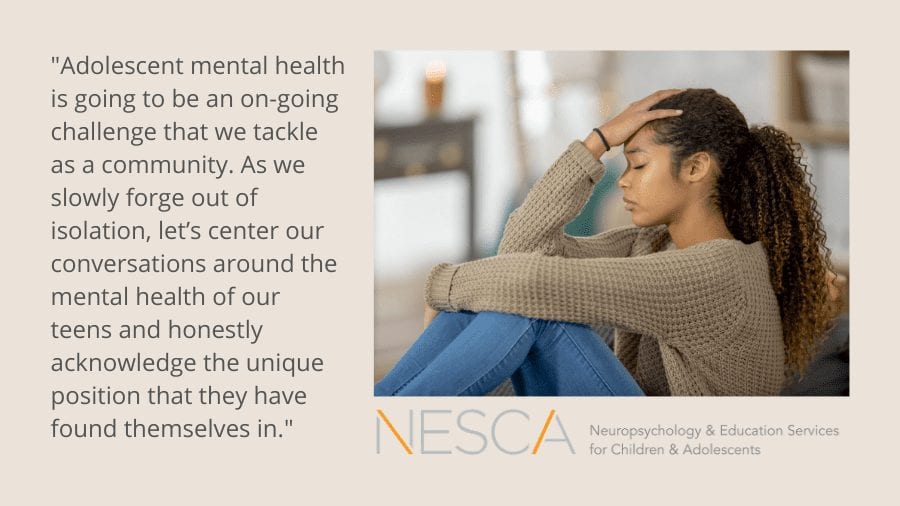
Adolescent mental health is going to be an on-going challenge that we tackle as a community. As we slowly forge out of isolation, let’s center our conversations around the mental health of our teens and honestly acknowledge the unique position that they have found themselves in.

References

Carey, B. (2021, February 23). For some teens, it’s been a year of anxiety and trips to the e.r. The New York Times. https://www.nytimes.com/2021/02/23/health/coronavirus-mental-health-teens.html

Leeb, R.T., Radhakrishnan, L., Martinez, P., Njaj, R., Holland, K.M. (2020, October 27). Mental health-related emergency department visits among children aged <18 during the covid-19 pandemic. MMWR Morbidity and Mortality Weekly Report 2020:1675-1680. DOI: http://dx.doi.org/10.15585/mmwr.mm6945a3


About the Author

Sophie Bellenis is a Licensed Occupational Therapist in Massachusetts, specializing in educational OT and functional life skills development. Bellenis joined NESCA in the fall of 2017 to offer community-based skills coaching services as a part of the Real-life Skills Program within NESCA’s Transition Services team. Bellenis graduated from the MGH Institute of Health Professions with a Doctorate in Occupational Therapy, with a focus on pediatrics and international program evaluation. She is a member of the American Occupational Therapy Association, as well as the World Federation of Occupational Therapists. Having spent years delivering direct services at the elementary, middle school and high school levels, Bellenis has extensive background with school-based occupational therapy services.  She believes that individual sensory needs and visual skills must be taken into account to create comprehensive educational programming.


To book an appointment or to learn more about NESCA’s Occupational Therapy Services, please fill out our online Intake Form, email info@nesca-newton.com or call 617-658-9800.


Neuropsychology & Education Services for Children & Adolescents (NESCA) is a pediatric neuropsychology practice and integrative treatment center with offices in Newton, Massachusetts, Plainville, Massachusetts, and Londonderry, New Hampshire, serving clients from preschool through young adulthood and their families. For more information, please email info@nesca-newton.com or call 617-658-9800.


The Uncertainty, Stress and Anxiety About What School Will Look Like

By | NESCA Notes 2020

*This blog post was originally published prior to the start of in-person school last fall for some. While many students have returned to their school buildings, many others are just now returning or will be in the coming weeks. 

By: Cynthia Hess, PsyD
Pediatric Neuropsychologist Fellow and Therapist

Much of adjusting to the world in the midst of a global pandemic has been learning to live with nearly constant uncertainty. Undoubtedly, this pandemic and ensuing uncertainty has caused significant stress for youth and their families. The experience of persistent stress can result in increased vulnerability to anxiety and depression. Symptoms may become magnified in those who already faced mental health challenges. There is little doubt that there will be increases in mental and behavior health problems for children and families both in anticipating the re-opening of schools, and when schools reopen their physical buildings.

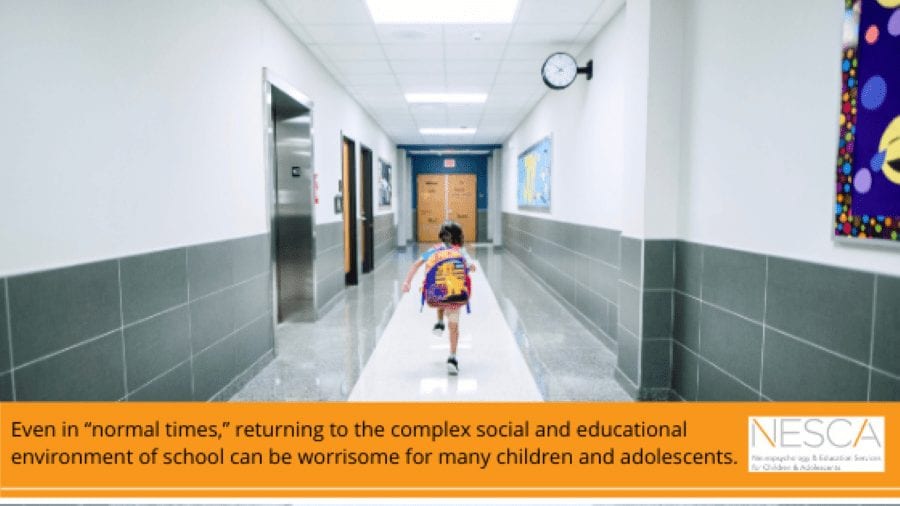
We all wonder what school will look like in the fall. The anticipation of returning to school can be especially stressful, and will likely be so for most youth. Given that students will not have been in schools with their peers for several months, it can be anticipated that they might feel a heighted sense of insecurity and uncertainty. Even in “normal times,” returning to the complex social and educational environment of school can be worrisome for many children and adolescents.

Each individual child will have had their own experiences while schools were closed. Some children and/or staff members may have been impacted by COVID-19 and some families and/or staff may be experiencing financial hardship due to parental unemployment or loss of household income. It is important to realize that regardless of their experience, each individual will have a unique response. It is helpful to recognize the signs of stress and help children learn positive ways of coping with it.

Signs of stress in preschool children include, but are not limited to, anger, nervousness, eating and sleeping problems (including nightmares), fear of being alone, irritability and uncontrollable crying.

In elementary age children, stress may manifest as increased complaining of headaches and stomachaches, feeling insecure, reduced appetite and difficulty sleeping, withdrawal and worrying about the future.

Signs of stress in pre-teens and teens may include anger, disillusionment, distrust of the world, low self-esteem, stomachaches and headaches, panic attacks and rebellious behavior.

As each person works through this very challenging situation, it is more important than ever to adopt a position of acceptance, as we never truly know what another person is experiencing or has experienced. The following are offered as suggestions on how to help children and teens cope with stress.

  • Help them identify how they are feeling and acknowledge and validate those feelings.
  • Encourage them to talk about what is bothering them.
  • Share strategies you use to cope with stress.
  • Talk openly and, as appropriate, share stories about stress in your day.
  • Find a physical activity and/or hobby that they enjoy and encourage them to participate.
  • Encourage them to eat healthy foods and emphasize the importance of a healthy lifestyle, especially as it relates to stress.
  • Make sure they get plenty of sleep.
  • Set clear expectations, without being overly rigid, and allow for “down” time.
  • Spend time outdoors, encourage them to do something they love – read a book, ride their bike, bake, etc.
  • Learn and teach your children relaxation skills, such as breathing exercises, muscle relaxation exercises, meditating, yoga, drawing or writing.

Our world will have changed by the time children re-enter their classrooms. No matter what happens in the fall, when it is time for school to start, it will inevitably be stressful. Learning to cope with and manage stress is important for physical and emotional health. However, if you are concerned about your child or are struggling yourself, seek help and support for yourself, your child or anyone in your family who is struggling.

Below are some helpful resources:

https://www.apa.org/topics/children-teens-stress

https://staging.nesca-newton.com/helping-your-anxious-child-through-covid-19/

https://childmind.org/article/how-to-ask-what-kids-are-feeling-during-stressful-times/

https://healthy.kaiserpermanente.org/health-wellness/health-encyclopedia/he.stress-in-children-and-teens.ug1832


About the Author

Dr. Cynthia Hess recently graduated from Rivier University with a PsyD in Counseling and School Psychology. Previously, she earned an M.A. from Antioch New England in Applied Psychology. She also worked as an elementary school counselor and school psychologist for 15 years before embarking on her doctorate. During her doctorate, she did her pre-doctoral internship with RIT in Rochester, N.Y. where she worked with youth ages 5-17 who had experienced complex developmental trauma. Dr. Hess’s first post-doctoral fellowship was with The Counseling Center of New England where she provided psychotherapy and family therapy to children ages 5-18, their families and young adults. She also trained part-time with a pediatric neuropsychologist conducting neuropsychological evaluations. Currently, Dr. Hess is a second-year post-doctoral fellow in pediatric neuropsychological assessment, working with NESCA Londonderry’s Dr. Angela Currie.


To schedule an appointment with one of NESCA’s expert neuropsychologists, please complete our online intake form


Neuropsychology & Education Services for Children & Adolescents (NESCA) is a pediatric neuropsychology practice and integrative treatment center with offices in Newton and Plainville, Massachusetts, and Londonderry, New Hampshire, serving clients from preschool through young adulthood and their families. For more information, please email info@nesca-newton.com or call 617-658-9800.


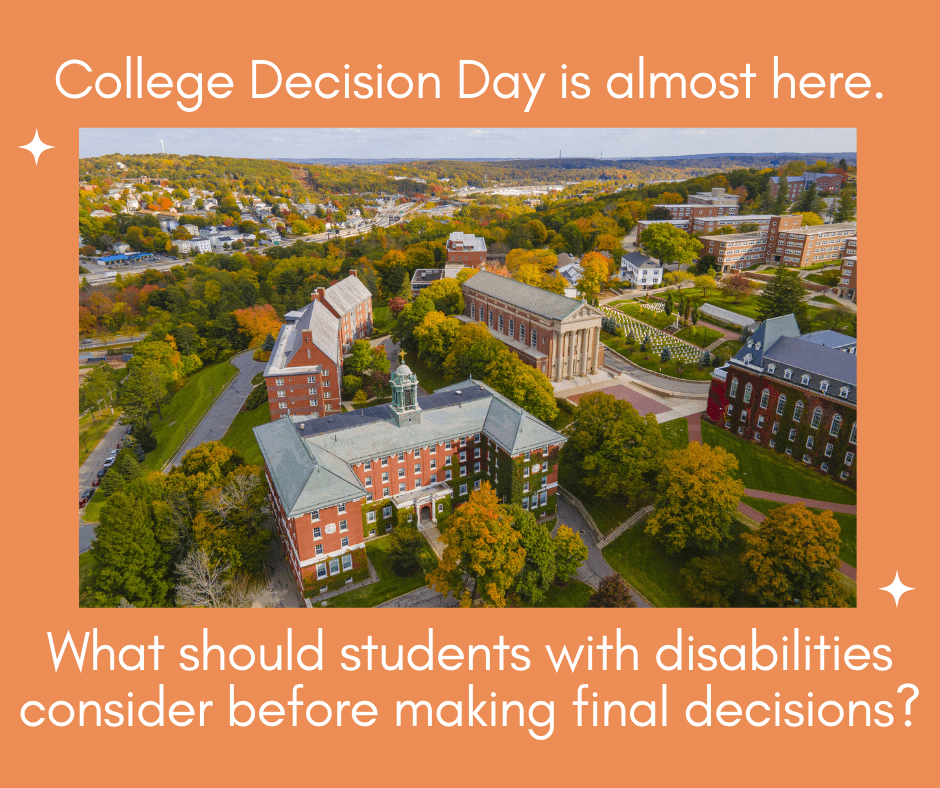
Choosing a College – Key Considerations for Students with Disabilities

By | NESCA Notes 2025

By: Kelley Challen, Ed.M., CAS
Director of Transition Services; Assistant Director, NESCA

May 1st, often known as “College Decision Day,” marks the traditional deadline for students to submit their deposit and commit to colleges. With students applying to more colleges than ever—including multiple “safety schools”—many will spend the winter and spring months of their senior year carefully weighing their options.

This year in particular, students may be inclined to wait until the last minute to commit to a college as funding, staffing, and programming are a bit more uncertain.

There are some common variables that students learn to compare when researching and visiting colleges:

  • Location
  • Cost
  • Scholarships and Financial Aid
  • Size (campus size, number of undergraduate students, class sizes, etc.)
  • Strength and Availability of Majors
  • Retention and Graduation Rates
  • Internships
  • Gut feelings

But, for students with disabilities, there is often additional information that can be useful in making a decision to commit to a particular college. Below are five important factors that can be helpful to explore when researching, visiting, and communicating with colleges in order to make a final selection, if not earlier in the college application process:

  • Explore student clubs and organizations. Student participation in clubs and campus activities is known to contribute to the student’s retention, persistence, and success in college. Therefore, researching student groups should be an important aspect of the college selection process for every college student. However, for students with social, emotional, or other disabilities that impact communication and connection with others, participation in student clubs and organizations can also provide exactly the structure needed to assist the student in forging both initial and lasting relationships in college. Therefore, it’s important to research ahead of time and ensure that there are structured groups on campus you can see yourself being part of including hobby-based clubs, athletics, interest-based student organizations, and even disability advocacy groups.
  • Research foreign language and math requirements. If you received a foreign language waiver in high school or took alternative math courses, don’t assume the same will apply in college. College accommodations operate under different laws and policies, so it’s essential to verify foreign language and math requirements and whether course substitutions or other accommodations (e.g., pass/fail grading, adjustments to the class participation requirement, etc.) are permitted. It is important to realize that even colleges that allow substitutions may not be able to do so if the language is central to the student’s chosen major/course of study. If substitutions are not allowed, it is useful to ask about foreign language faculty on campus and to look for foreign languages that may be easier to learn, such as Latin or Greek, which are not spoken. If math is required, make sure you have a plan for tackling that requirement such as summer courses or tutoring assistance.
  • Meet with Disability Support Services (often called Student Accessibility Services or Student Success Services). Beyond inquiring about available accommodations and assistive technology, pay attention to how accessible the office is. Is it easy to locate on campus? Do staff members seem welcoming and knowledgeable? Scheduling an appointment can also give insight into how efficiently the office responds to student needs and how comfortable you will feel working with the staff. Navigating support services efficiently can make a significant difference in your college experience.
  • Understand the reduced course load policy. For students who struggle with processing speed, writing efficiency, anxiety, or other challenges that may impact workload management, it’s important to understand the college’s reduced course load policies. Sometimes, beginning college with a “reduced course load” or “underload” is exactly the ramp that students need to managing college routines. Other students may need this accommodation at more than one point in college. Students should therefore ask about the minimum credits required to maintain full-time status and financial aid eligibility, as well as whether freshmen can start with a reduced load or take summer courses to balance their schedule. Knowing whether there are limits on the number of semesters that a student is able to take a reduced course load is also important for many students. Clarifying these policies in advance can help ensure a manageable and successful transition to college-level coursework.
  • Contact the Office of Residential Life. Not all dorm life is created equal, especially for students with disabilities who require accommodations in college. Ask questions about the leadership structure within the dorms, the training/qualifications for residential directors and residential assistants in the freshman housing, how social relationships are fostered and facilitated within the dorm environment, and how dorm conflicts are resolved. For students who require a medical single (e.g., a single dorm room on the basis of documented social or emotional difficulties, allergies, etc.), elevator access, or a service/support animal, make sure that you confirm not only that these accommodations are available, but also where that housing is available on campus. For instance, single dorm rooms are sometimes only available within dorms or housing complexes that are traditionally reserved for upperclass students, reducing the opportunity for first-year bonding. Confirming housing details in advance can help you make an informed housing decision and ensure both your comfort and success in college.

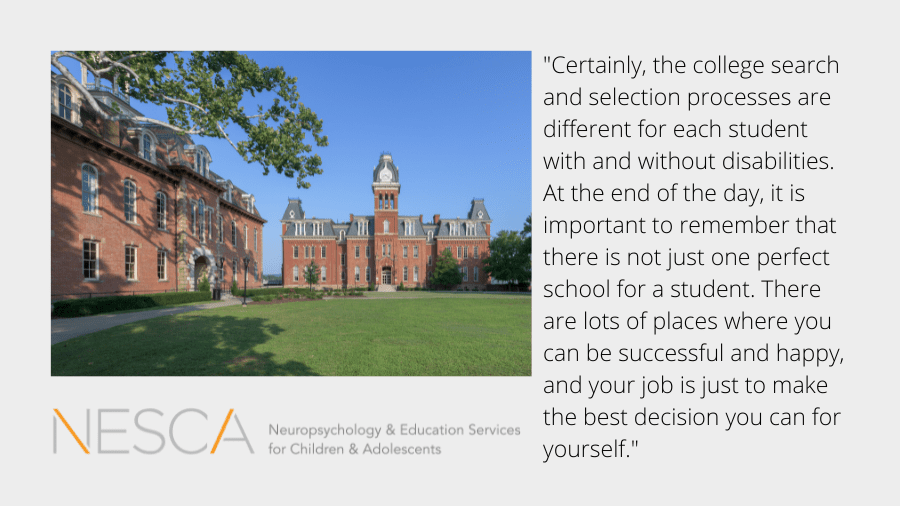
Certainly, the college search and selection processes are different for each student, both with and without disabilities. But my hope is that this list of considerations helps students to make a more informed and confident decision about where they will thrive academically, socially, and personally. At the end of the day, it is important to remember that there is not just one perfect school for a student. There are lots of places where you can be successful and happy, and your job is just to make the best decision you can.


About the Author:

Kelley Challen, Ed.M., CAS, is NESCA’s Director of Transition Services, overseeing planning, consultation, evaluation, coaching, case management, training and program development services. She is also the Assistant Director of NESCA, working under Dr. Ann Helmus to support day-to-day operations of the practice. Ms. Challen began facilitating programs for children and adolescents with special needs in 2004. After receiving her Master’s Degree and Certificate of Advanced Study in Risk and Prevention Counseling from Harvard Graduate School of Education, Ms. Challen spent several years at the MGH Aspire Program where she founded an array of social, life and career skill development programs for teens and young adults with Asperger’s Syndrome and related profiles. She additionally worked at the Northeast Arc as Program Director for the Spotlight Program, a drama-based social pragmatics program, serving youth with a wide range of diagnoses and collaborating with several school districts to design in-house social skills and transition programs. Ms. Challen is co-author of the chapter “Technologies to Support Interventions for Social- Emotional Intelligence, Self-Awareness, Personality Style, and Self-Regulation” for the book Technology Tools for Students with Autism. She is also a proud mother of two energetic boys, ages six and three. While Ms. Challen has special expertise in supporting students with Autism Spectrum Disorders, she provides support to individuals with a wide range of developmental and learning abilities, including students with complex medical needs.

Neuropsychology & Education Services for Children & Adolescents (NESCA) is a pediatric neuropsychology practice and integrative treatment center with offices in Newton, Massachusetts, Plainville, Massachusetts, and Londonderry, New Hampshire, serving clients from preschool through young adulthood and their families. For more information, please email info@nesca-newton.com or call 617-658-9800.

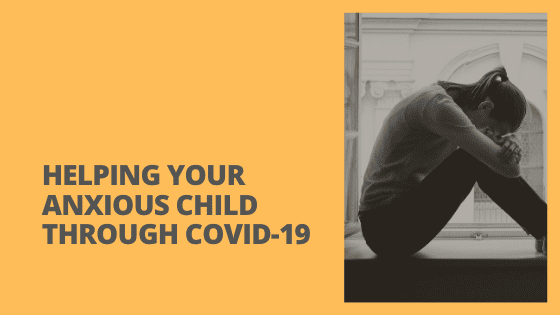
Helping Your Anxious Child through COVID-19

By | NESCA Notes 2020


Almost a year into Covid-19, many of us can use this blog as a reminder when our children exhibit signs of anxiety from learning of new developments with the pandemic; friends, family or others testing positive for Covid-19; or returning to school. The guidance shared in this blog still holds true, nearly one year since many of us went into lockdown and schools shuttered. 


By Yvonne M. Asher, Ph.D. 
Pediatric Neuropsychologist

A recent New York Times article by Jessica Grose discusses ways to support your child, specifically helping them to feel less anxious, during the COVID-19 situation. Their “top 4” suggestions are great ones – validate their feelings, manage your own anxiety, aim for some kind of predictable routine and try mindfulness or progressive muscle relaxation activities.

The larger consideration in this case is this: anxiety, particularly in the current situation, is normal. We can label it with clinical words, give you our best clinical tools and recommend that you seek help (and please do!). At the same time, if we take a large step back, being anxious right now is exactly how we are meant to feel. We are social beings, designed to live in the community and support one another through face-to-face social interactions. When something threatens our safety, or the safety of our families, it is normal to respond with fear, worry and hypervigilance. Everyday interactions that would typically result in no response, like hearing someone nearby cough or sneeze, all of a sudden have become indicators of a threat. Even having others in close proximity to us is now a threat, meaning that the social communities in which we are supposed to thrive have now become potentially dangerous places. In this new environment, our bodies, well-attuned and primed to handle threats, are doing what they should do – they are putting us on “hyper-alert mode,” keeping us exceedingly sensitive to these threats so that we can avoid them and preserve our safety.

Children are in this mode, too, albeit with far fewer resources to help mitigate their fear and worry. As adults, we have far more lived experience with threats, anxiety, fear and worry, and we can use this experience to manage our responses to this novel situation. For children, this may be the first time they are struggling with persistent worry and fear. Or, they may have struggled to cope with other fears and worries for a long time, and this new stressor has overwhelmed their system. In either case, it is important to normalize fear and anxiety, in addition to the myriad of other emotions that children may be experiencing.

The key is balance. We have to balance validating and normalizing feelings with reinforcing unhealthy habits. What does that look like? One dimension to consider is time – validating and normalizing feelings is a short acknowledgement that the child is heard, understood and believed. On the other hand, repeatedly discussing the same questions or topics, engaging in persistent conversations about the threats and explaining “adult” information to children (especially dire predictions, long-term impacts, etc.) is not healthy. These behaviors may appear to decrease anxiety in the short-term, but over time, can be detrimental.

Another important consideration is space – focusing on what is happening in the present is important to help children process and understand the radical changes that are impacting their day-to-day lives. However, if you find that your conversations linger on the past or the future, try to shift back to the present. Your mind may be filled with regrets from the past (e.g., “I knew we should have stocked up on their favorite snack last time we were at the store”) or fears for the future (e.g., “My parents are elderly and at high risk”), and these thoughts are entirely normal. At the same time, when talking with children, it is important to try as much as possible to focus on the here and now. Of course, it is important to give children the space to express their fears for the future, and we can and should acknowledge and validate these fears. We can also, simultaneously, bring children’s focus back to the present and back to tangible, concrete things that they can do (e.g., “I know you are really worried about grandma, and it’s sad that we can’t see her right now. Everyone is working hard to keep her safe, and we are going to call and talk to her later today”).

For some children, advanced intellectual abilities may allow them to understand (at least, in some sense) a great deal of the information that is portrayed on the television and news media. However, it is important to remember that, while their cognitive abilities are years ahead of their peers, their emotional development is not. It may be necessary to closely monitor their online activity, as they may be seeking out information (which is a normal response to fears, especially fear of the unknown) without having the critical thinking abilities to understand the source or potential biases in the way the information is presented. On the other hand, some children may struggle to understand the situation, either because of their young age, learning disability or other developmental delays. If this describes your child, consider putting together a story, with pictures and words, to help them understand some basic information (e.g., why we can’t go to school right now, why we can’t go play with friends). This is often referred to as a “social story,” and clinicians at NESCA can help you create one specifically for your child.

Last, and most certainly not least, seek help and support for yourself, your child or anyone in your family who is struggling. While experiencing anxiety during these times is normal, when these thoughts and feelings are taking over your child’s daily life (or your own), it may be time to look for assistance. Many clinicians, including here at NESCA, are available via phone or videoconferencing, and we can assist with a range of concerns. Whether you want a brief consultation to help you respond to persistent questions from your child or whether your child has a pre-existing anxiety disorder that is exacerbated by these challenging times, we are here to help.


About Pediatric Neuropsychologist Dr. Yvonne Asher:

Dr. Yvonne M. Asher enjoys working with a wide range of children and teens, including those with autism spectrum disorder, developmental delays, learning disabilities, attention difficulties and executive functioning challenges. She often works with children whose complex profiles are not easily captured by a single label or diagnosis. She particularly enjoys working with young children and helping parents through their “first touch” with mental health care or developmental concerns.

Dr. Asher’s approach to assessment is gentle and supportive, and recognizes the importance of building rapport and trust. When working with young children, Dr. Asher incorporates play and “games” that allow children to complete standardized assessments in a fun and engaging environment.

Dr. Asher has extensive experience working in public, charter and religious schools, both as a classroom teacher and psychologist. She holds a master’s degree in education and continues to love working with educators. As a psychologist working in public schools, she gained invaluable experience with the IEP process from start to finish. She incorporates both her educational and psychological training when formulating recommendations to school teams.

Dr. Asher attended Swarthmore College and the Jewish Theological Seminary. She completed her doctoral degree at Suffolk University, where her dissertation looked at the impact of starting middle school on children’s social and emotional wellbeing. After graduating, she completed an intensive fellowship at the MGH Lurie Center for Autism, where she worked with a wide range of children, adolescents and young adults with autism and related disorders.


Neuropsychology & Education Services for Children & Adolescents (NESCA) is a pediatric neuropsychology practice and integrative treatment center with offices in Newton, Massachusetts, Plainville, Massachusetts, and Londonderry, New Hampshire, serving clients from preschool through young adulthood and their families. For more information, please email info@nesca-newton.com or call 617-658-9800.


To book an appointment with Dr. Yvonne Asher, please complete our Intake Form today. For more information about NESCA, please email info@nesca-newton.com or call 617-658-9800.


Media’s Portrayal of our Differences

By | NESCA Notes 2021

By Dot Lucci, M.Ed., CAGS
Director of Consultation and Psychoeducational Services, NESCA

Media has portrayed all aspects of society’s strengths, as well as its ugliness, the diversities of its peoples and cultures, political topics, events in history and so much more for as long as television and movies have existed. Often, television and movies try to stay within norms, while, at other times, they push boundaries or raise controversial topics.

  • In 1952 on the “I Love Lucy” show, the episode, “Lucy is Enceinte,” aired in which Lucy learned she was pregnant. But the show never uttered the word, “pregnant,” and then she had the first child brought into a family on TV.
  • Prior to 1965, black actors did not have leading roles and were not portrayed favorably, until “I Spy” starred a black actor in a leading part.
  • Interracial relationships did not appear until 1968 when “Star Trek” aired the first interracial kiss.
  • In 1971, “All in the Family” had the first disclaimer for mature audiences due to its content and language.
  • In the 1950-60s, gays were portrayed in films but again not favorably. It wasn’t until after the Stonewall Riots in 1970 where “The Boys in the Band” depicted gay people in a more honest light. In 1997, Ellen DeGeneres announced on her sitcom, “Ellen,” that she was gay, making it the first prime time major TV sitcom with an openly gay lead character.

Did these shows “get it right?” Did they represent the people, cultural mores, times and issues accurately? You can be the judge. We each judge the shows we watch, and many of us have different criteria for what is right, good, funny, truthful, accurate, scary, etc. Media’s representation of society’s peoples is hard-pressed to “get it right” when it comes to portraying social groups, including most marginalized people (i.e., people with disabilities, races, genders, ethnic groups, LGBTQ, etc.). It is hard to get it right as we are not a monolith. So, even after research is done, movie producers, writers, directors, actors and actresses can still not quite get it right. When portraying a member of any of these groups, they often miss the mark by over-generalizing, simplifying, sugar-coating, missing the point or highlighting things that we wouldn’t highlight about ourselves. When weaving these characters into media, many factors play their own role in the plot – political climate, story line, social norms and monetary ratios, etc. Even with the best of intentions, movies and shows still miss the mark and offend.

Media has often portrayed these groups through stereotypical eyes, not capturing the depth and diversity within each group – even with the right due diligence in depicting these characters. So, how do they portray the breadth of us in ways that satisfy all of us with accurate representations – when each one of us is so uniquely different?

In 1990, on the series “Life Goes On,” Chris Burke, who has Down Syndrome, played the character Corky. He was the first person with Down Syndrome in a leading role. In 2018, Samantha Elisofon and Brandon Polansky – both autistic actors – were featured in a full-length feature called “Keep the Change.”

Over the years many actors/actresses have portrayed people whom they are not – it is what actors do as their job. In “Rainman,” Dustin Hoffman played an autistic savant. Did he get it right? Did he miss the mark? Did he act in ways that offended some and not others? The answer to these questions is yes and no. This has been happening for years – as long as TV and movies have existed. They portray gay people when they are straight, abused people when they have not been abused, killers when they are kind and gentle people.

Likewise, portrayals of people with disabilities have changed over the years, just like other aspects of our society. Historically, portrayals have often included characters who are one-dimensional, stereotypical and pity-provoking. Disability rights activists often use phrases like “inspirational-porn,” “super-crip,” or “cripping-up” to describe the attempts at representing them in media. Autism, like most disabilities, is challenging to portray. Over the years, representation has changed, but it may still be perceived as exaggerated, stereotyped or unrealistic (i.e., “Good Doctor,” “Big Bang Theory,” “Rainman,” etc.).

“Music,” a new movie about an autistic girl (not played by an autistic person) was recently released, sparking outrage among many people, especially within the autism community (Full disclosure – I have not seen the movie yet). The criticisms are that the character is one-dimensional, the girl is not played by an autistic person and there is the use of restraint to deal with aberrant behavior. No one movie or TV show can represent the breadth of those who are diagnosed with an autism spectrum disorder. As the saying goes, if you’ve met one person with autism, you’ve met one person with autism. Autism is a spectrum, and a movie character will not be able to hold the diversity of the population; just like a gay character portrayal cannot tell the whole gay experience. Perhaps even if an autistic person played the role, there might still be controversy. Just like when Chris Burke played Corky, there were people who praised the show and others who disliked it because it wasn’t their experience with Down Syndrome.

We have a long way to go in our society regarding equality, acceptance and inclusion of neurodiverse, racial, ethnic, sexual topics and people. So why do we expect movies and TV shows to be different? Our movie and television history demonstrates that we’ve come a long way, change can happen and media does “tackle” issues of the times. Is change slow? Yes, it is. Do we have a long way to go? You bet, especially when it comes to portrayal of people with disabilities and their inclusion in movies as actors and actresses.

I like to approach watching movies about these issues with a wide-angle lens and limited expectations. I view them as being made to inform; enlighten; open the door to others asking questions; promote thinking, awareness, inclusion, acceptance; mirrors to see ourselves in characters – fictional or otherwise; increase understanding and empathy; or share a perspective or different point of view. I also think that the intentions of most directors, actors/actresses, screen writers, etc. are coming from the right place (even if flawed). They are trying to make movies that make a point, share a perspective, increase awareness, promote inclusion, comfort, knowledge, etc. Movies that highlight sensitive topics, controversial topics and marginalized groups are good for us whether we agree with the portrayal or not. If we are outraged and we begin talking and sharing our opinions, especially our first-person opinions, we broaden awareness and knowledge. So even if you strongly dislike a movie, something good may come from it. By my writing this blog and mentioning the movie “Music,” my guess is I have piqued your curiosity if you didn’t know about it. And maybe you might check it out on Google, read the reviews and learn about the controversy. What’s wrong with that? If you do explore it, wherever you land – liking or disliking it – I’m glad you took the time to think about it, asked yourself questions, felt emotions and hopefully will continue to think about how marginalized groups are portrayed in movies.

References


https://www.insider.com/kate-hudson-responds-to-sia-music-movie-casting-criticism-2021-2
https://www.dazeddigital.com/film-tv/article/51253/1/autistic-person-responds-sia-film-music-maddie-ziegler-autism-speaks
https://www.teenvogue.com/story/trailer-for-sias-music-hurts-autistic-girls


About the Author

NESCA’s Director of Consultation and Psychoeducational Services Dot Lucci has been active in the fields of education, psychology, research and academia for over 30 years. She is a national consultant and speaker on program design and the inclusion of children and adolescents with special needs, especially those diagnosed with Autism Spectrum Disorder (ASD). Prior to joining NESCA, Ms. Lucci was the Principal of the Partners Program/EDCO Collaborative and previously the Program Director and Director of Consultation at MGH/Aspire for 13 years, where she built child, teen and young adult programs and established the 3-Ss (self-awareness, social competency and stress management) as the programming backbone. She also served as director of the Autism Support Center. Ms. Lucci was previously an elementary classroom teacher, special educator, researcher, school psychologist, college professor and director of public schools, a private special education school and an education collaborative.

Ms. Lucci directs NESCA’s consultation services to public and private schools, colleges and universities, businesses and community agencies. She also provides psychoeducational counseling directly to students and parents. Ms. Lucci’s clinical interests include mind-body practices, positive psychology, and the use of technology and biofeedback devices in the instruction of social and emotional learning, especially as they apply to neurodiverse individuals.


To book a consultation with Ms. Lucci or one of our many expert neuropsychologists, complete NESCA’s online intake form. Indicate whether you are seeking an “evaluation” or “consultation” and your preferred clinician/consultant in the referral line.


Neuropsychology & Education Services for Children & Adolescents (NESCA) is a pediatric neuropsychology practice and integrative treatment center with offices in Newton, Massachusetts, Plainville, Massachusetts, and Londonderry, New Hampshire, serving clients from preschool through young adulthood and their families. For more information, please email info@nesca-newton.com or call 617-658-9800.


Celebrate the Small Wins

By | NESCA Notes 2021

By: Tabitha Monahan, M.A., CRC
NESCA Transition Specialist/Counselor

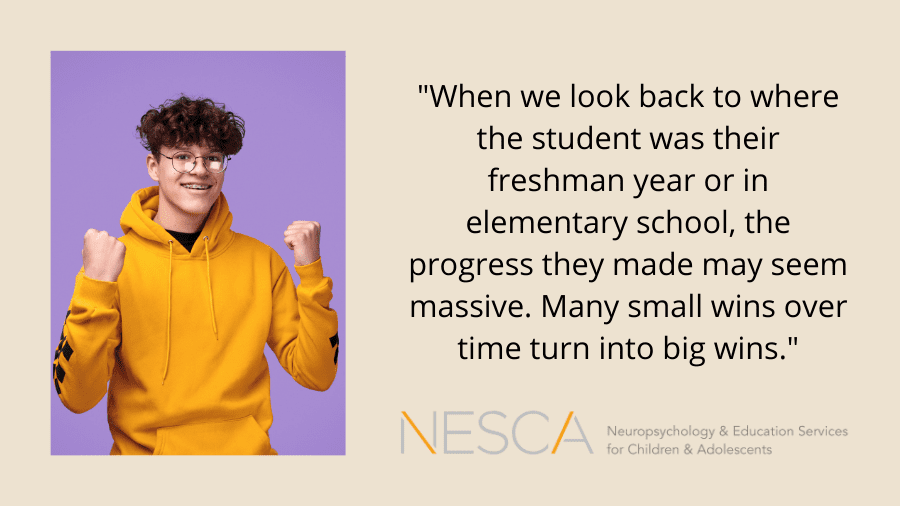
In the moment, it can be hard to see the change. It can be hard to find the successes. This is true for any improvement we try to do, whether it is trying to have a healthier lifestyle or build the skills needed for postsecondary life. When looking at a student’s vision, it can feel like getting there is an impossible task. Maybe the student is the only one who believes they can get there. Perhaps they don’t understand all the pieces that need to be put in place. When the rest of the IEP team has doubts, those doubts will likely spread to the student. Objectives about SMART Goals might be added to help the student learn how to set realistic goals and build an understanding of setting small goals and determining specific objectives. However, when we look back to where the student was their freshman year or in elementary school, the progress they made may seem massive. Many small wins over time turn into big wins.

What are the small wins? It might be getting a better grade on a test in math. It might be fastening the buttons on a shirt without help. It could be understanding another’s point of view one time.  Maybe it was trying a bite of one new food. Maybe they were able to identify a coping skill that would have helped after having a rough day. By themselves, none of these seems like they will help a person reach success once they leave special education. But small wins build confidence. They build pride. If we celebrate the small wins, not only do we get reminded that progress is possible, but the student knows they accomplished something. An IEP is filled with areas where the student needs help and even at a young age – when the student is getting more help than their peers – they know it. They should know where they are succeeding, too.

So how can we help our student celebrate the small wins?

  • A high five and a “way to go”
  • Help your child create a list of successes and have them add each win to the list
  • Remind them of where they were at the beginning of the year
  • Pick a fun activity as a “reward”
  • Have your child add to one of their favorite hobbies (e.g., a small LEGO set, a new book, trading cards, collectibles, action figures)
  • Frame it! (If it’s not paper, make part of the celebration part art project)

What do you do to celebrate the small wins?


About the Author

Tabitha Monahan, M.A., CRC, is an experienced transition evaluator and vocational counselor. While she is well-versed in supporting a wide range of transition-aged youth, she is especially passionate and knowledgeable in helping clients and their families navigate the complex systems of adult services and benefits as well as medical and mental health systems. She is further adept in working individually with students of all abilities to empower self-advocacy and goal achievement.


To schedule an appointment with one of NESCA’s expert transition specialists or neuropsychologists, please complete our online intake form


Neuropsychology & Education Services for Children & Adolescents (NESCA) is a pediatric neuropsychology practice and integrative treatment center with offices in Newton and Plainville, Massachusetts, and Londonderry, New Hampshire, serving clients from preschool through young adulthood and their families. For more information, please email info@nesca-newton.com or call 617-658-9800.


School Stressors in a Pandemic

By | NESCA Notes 2021

By: Amity Kulis, PsyD
Pediatric Neuropsychologist, NESCA

A recent article published by NBC News highlights the multiple stressors facing school-aged children and their families during this pandemic, with a more specific focus on the differing stress levels between remote and in-person learners. It is becoming clearer that during this time, learners and their families are facing higher rates of depression and anxiety, and there are concerns that students who are attending school remotely are learning less, particularly children with disabilities and those from low-income families.

A recent study from NBC News and Challenge Success, a nonprofit affiliated with Stanford Graduate School of Education, compared the differences between students who have been learning exclusively online and those who have been able to attend at least partially in-person. The study involved more than 10,000 students in 12 U.S. high schools who completed a self-questionnaire provided by the research study. The high schools were reported to come from multiple locations around the country (Arizona, Texas, New York and Midwest) and were descried as “demographically similar to the nation in terms of student family income,” though this was not true of being matched for race and likely other factors not discussed in the article. This also does not appear to be a peer-reviewed study, which suggests limitations to predictive power of the outcomes. Nevertheless, findings suggested that students who spent time in the classroom self-reported lower rates of stress and worry than students who were fully remote. An alarming finding was that half of all students, regardless of how they were attending school at the time of the study, reported they were more stressed by school than they had been during the previous year. Students reported exhaustion, headaches, insomnia or other stress-related ailments at high levels – regardless of whether they were in-person or not – with the highest rates being for remote learners: 84 percent fully remote learners; 82 percent hybrid students; and 78 percent fully in-person.

The article suggested that additional stressors found for remote students included on average more homework and that these remote students were also less likely to feel they had an adult they could go to with a personal problem. Anecdotally, one teacher commented, “In the room, you get more eye contact.” The teacher added, “On the screen, oftentimes the kid could be sitting in front of a window. You can’t see them, so it’s hard to make sure they’re attentive.”

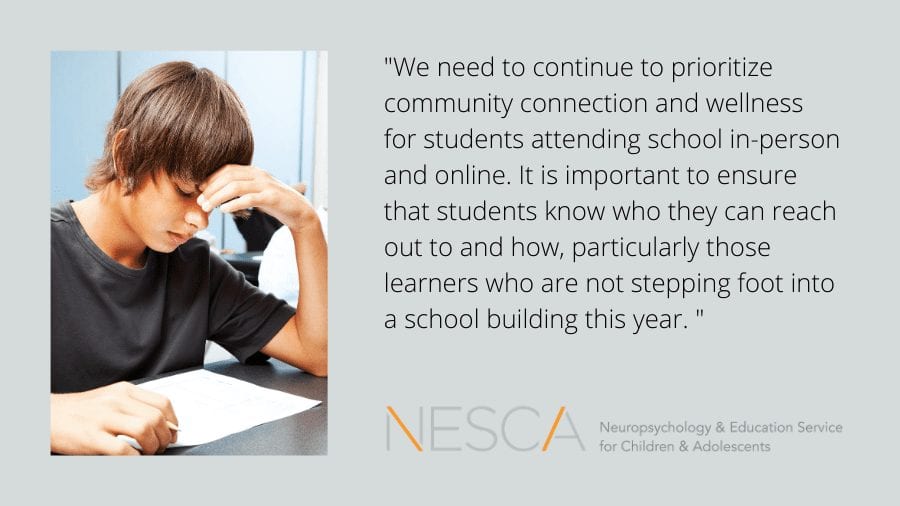
While there are limitations to this study, it is clear that students and their families are currently experiencing a high level of stress. Many schools have been aware of this problem and have taken steps to embed extra programming into their students’ weeks. We need to continue to prioritize community connection and wellness for students attending school in-person and online. It is important to ensure that students know who they can reach out to and how, particularly those learners who are not stepping foot into a school building this year. It is also important to build in opportunities for stress management, as well as instruction in healthy habits, such as exercise, sleep hygiene and healthy eating. Clearly both children and their caregivers could benefit from this type of support right now. If you or a loved one is experiencing heightened emotional stress, it is important to reach out for help. This can include alerting your child’s school to their increasing stress, as well as bringing concerns to your child’s doctor. A referral to a psychologist or licensed mental health professional may be in order to help you and your child through this difficult time.

Source: Remote Students Are More Stressed Than Their Peers In The Classroom, Study Shows by Erin Einhorn, 2/15/2021 published by NBC News.


About the Author
Dr. Amity Kulis joined NESCA in 2012 after earning her doctoral degree in clinical psychology from the Massachusetts School of Professional Psychology, with a concentration in Children, Adolescents and Families (CAF). She completed post-doctoral training in pediatric neuropsychology with an emphasis on treating children with developmental, intellectual, learning and executive functioning challenges. She also has extensive training psychological (projective) testing and has conducted individual and group therapies for children of all ages. Before joining NESCA, Dr. Kulis worked in private practices, clinics, and schools, conducting comprehensive assessments on children ranging from toddlers through young adults. In addition, Dr. Kulis has had the opportunity to consult with various school systems, conducting observations of programs, and providing in-service trainings for staff. Dr. Kulis currently conducts neuropsychological and psychological (projective) assessments for school-aged children through young adulthood. She regularly participates in transition assessments (focusing on the needs of adolescents as they emerge into adulthood) and has a special interest in working with complex learners that may also struggle with emotional challenges and psychiatric conditions. In addition to administering comprehensive and data-driven evaluations, Dr. Kulis regularly conducts school-based observations and participates in school meetings to help share her findings and consultation with a student’s TEAM.


To book an evaluation with Dr. Kulis or one of our many other expert neuropsychologists and transition specialists, complete NESCA’s online intake form.


Neuropsychology & Education Services for Children & Adolescents (NESCA) is a pediatric neuropsychology practice and integrative treatment center with offices in Newton, Massachusetts, and Londonderry, New Hampshire, serving clients from preschool through young adulthood and their families. For more information, please email info@nesca-newton.com or call 617-658-9800.


Executive Function Tools: The Calendar

By | NESCA Notes 2021

By: Sophie Bellenis, OTD, OTR/L
Occupational Therapist; Real-life Skills Program Manager and Coach, NESCA

When working with young adults and adolescents to build up executive function skills, my main goal is to find systems and strategies that are truly helpful, easily accessed and that will eventually be used independently. While there are many fabulous apps that have been developed to target specific organizational skills, such as medication management, creating to-do lists and taking notes, I would argue that the number one, most important tool is an accurate, up-to-date calendar. The format of a digital calendar provides three hugely important supports.

  1. Visual Map of Time – Time management is tricky, and for many of our students, the concept of time itself is quite abstract. A calendar that has chunks of time visually blocked out helps to concretize an abstract concept. Additionally, having a calendar can help students plan their work. If a student has five different assignments to work on in a given week, looking at a calendar to find available segments of time will often help them realize that leaving everything until the last minute will not be possible. Notably, this requires guidance at first. Asking students questions, such as, “how long does an assignment like this generally take you?” or “would that available hour on Tuesday give you enough time for your problem set?” will help them start to internally ask themselves the right questions.
  2. Built-in Notification Systems – Some students use the alarms on their phone as reminders that they need to complete academic or daily living tasks. For example, they may have an alarm at 7:00pm every evening as a prompt to take their medication. Digital calendar apps allow for notifications to be linked to an event or task. Sometimes a simple reminder 10 minutes before a meeting or class is plenty, and our students can arrive on time with that quick prompt. For other appointments, I have students set two separate notifications, one in the morning and one at the time they would need to start getting ready or prepared for an appointment. For example, if a student has a doctor’s appointment two months in the future, a student could benefit from setting a notification eight hours and 1 hour before the appointment. This way, they start their morning with an acute awareness of their responsibility that afternoon and are reminded again when they need to start getting ready to leave.
  3. Constant Access when Synced across Devices – Calendars, such as the Google Calendar, sync seamlessly across digital devices. The same calendar can be accessed from a phone, a tablet, a laptop or a desktop quickly and easily. Students can refer to their phone when they are out and about or their computer if they are focused in class.

Research shows us that building executive function skills requires direct instruction and the opportunity to practice (Semenov & Zelazo, 2019). While using a calendar may seem like a simple skill, many of the systems provided in high schools take away the opportunity for students to practice setting up and maintaining their own calendar. Online portals have calendars that are immediately synced to the teacher’s schedule with assignments and due dates already entered. Additionally, many of our students rely on their parents to keep track of any and all appointments (medical or otherwise), meetings and other scheduled activities. This means that when starting a more independent schedule – whether at a university, vocational program or first job – these students often find themselves overwhelmed by the deadlines and the number of responsibilities that they must track. I urge parents to slowly increase the number of appointment and activities that students are in charge of remembering on their own. Helping a student enter doctor or dentist appointments, vacation details, such as flight or bus times, and deadlines into their personal calendar helps them start to build this habit and provides opportunity for practice. We have the tools to help students make this transition more easily, and with small, intentional changes to expectations of responsibility and independence, we can provide students with tools in their back pockets so they are ready to support (and schedule) themselves!

References

Semenov A, D, Zelazo P, D: Mindful Family Routines and the Cultivation of Executive Function Skills in Childhood. Human Development 2019;63:112-131. doi: 10.1159/000503822


About the Author

Sophie Bellenis is a Licensed Occupational Therapist in Massachusetts, specializing in educational OT and functional life skills development. Bellenis joined NESCA in the fall of 2017 to offer community-based skills coaching services as a part of the Real-life Skills Program within NESCA’s Transition Services team. Bellenis graduated from the MGH Institute of Health Professions with a Doctorate in Occupational Therapy, with a focus on pediatrics and international program evaluation. She is a member of the American Occupational Therapy Association, as well as the World Federation of Occupational Therapists. Having spent years delivering direct services at the elementary, middle school and high school levels, Bellenis has extensive background with school-based occupational therapy services.  She believes that individual sensory needs and visual skills must be taken into account to create comprehensive educational programming.


To book an appointment or to learn more about NESCA’s Occupational Therapy Services, please fill out our online Intake Form, email info@nesca-newton.com or call 617-658-9800.


Neuropsychology & Education Services for Children & Adolescents (NESCA) is a pediatric neuropsychology practice and integrative treatment center with offices in Newton, Massachusetts, Plainville, Massachusetts, and Londonderry, New Hampshire, serving clients from preschool through young adulthood and their families. For more information, please email info@nesca-newton.com or call 617-658-9800.


How to Not Worry Alone: Signs Your Teen May Need More Help

By | NESCA Notes 2021

By: Moira Creedon, Ph.D. 
Pediatric Neuropsychologist, NESCA

As we reach nearly a year since children and teens in Massachusetts were sent home from school, many of us are experiencing the sadness and disappointment that comes from chronic stress. Combined with colder weather keeping us indoors and more limited daylight, it’s certainly harder for us to stay positive and upbeat. Children and teens have experienced tremendous and immeasurable loss over the last year – loss of normalcy, of freedom, of rites of passage like graduations, of competition and sport, of friendships, to name a few. Some have lost loved ones to illness and death, and others to separation and distance. They have experienced large doses of social deprivation and far less interaction with the world. And, while most children and teens will weather this storm, there are some whose resilience is very much at risk.

The evidence strongly suggests that there are increased rates of depression, anxiety, substance use and suicidal ideation in children and teens. Some changes in your child or teen since the “good old days” pre-pandemic are expected, just as ebbs and flows in our mood throughout the day or week are. So how is one to know when the situation is going from “normal adjustment” to the completely abnormal pandemic to a more dire and urgent need for help?  Here are few signs to keep alert to:

  • If you see your child withdrawing from activities they enjoy – even those around the house – pay attention. This might mean that a teen has stopped showing interest in baking projects, in connecting with friends over gaming, in watching movies with the family, etc. The shift from limited social interactions to total isolation is important.
  • If you see your child persistently struggling with daily living activities that used to be somewhat easy, keep a close eye on sleep and hygiene. Depressed children and teens tend to sleep much more or even much less than their peers with a sense of being tired and lethargic. Be alert for newer changes in hygiene and bathing that may have not been an issue before.
  • If you are noticing a persistent low or sad mood, pay attention to how your child talks about the future. A sense of hopelessness or difficulty articulating anything they look forward to about the future (for a family trip, for a chance to see a friend again, for a new season of a favorite show) is a sign that emotional health is precarious.
  • If you notice behavioral outbursts that happen more often and seem to grow more intense, your child or teen may be showing the irritability and anger that is common in depression in children and teens.
  • If your child had signs of anxiety or depression before the pandemic, the increased stress is likely to hit harder.

If a child or teen’s low mood seems to be persistent (around all the time) and pervasive (no matter what they are doing), it’s time to reach out for help. If you have noticed these struggles, who do you call?

  • Start with your child’s pediatrician. Many clinics have social workers on staff who can help to locate service agencies in your area. You can call and request a list of referral agencies or therapists. It may also help to ensure that there are not physical illnesses that are underlying the emotional problem.
  • Contact your child’s school. It’s worthwhile to check out how your child’s teacher perceives their engagement with school since a decline in academic functioning and even motivation to do any school work can be an important sign of a problem. Contact the guidance counselor, school psychologist, or social worker to ask for support. If the staff are unable to arrange therapy at school, they can provide names of therapists in the community.
  • Contact your insurance company either by calling or reviewing information on their website. Most providers are using telehealth platforms to interact with clients. Insurance companies regularly contact providers who are paneled to take insurance to see if they are accepting new patients for telehealth.
  • Ask friends or family for any providers they may have worked with in the past.

Asking for help for your struggling child or teen is a brave and powerful message. It shows your child that you do not ever need to worry alone.


For additional resources, please see:

The American Psychological Association at https://www.apa.org/monitor/2020/06/covid-suicide.

The Centers for Disease Control and Prevention at https://www.cdc.gov/coronavirus/2019-ncov/daily-life-coping/stress-coping/young-adults.html

National Suicide Prevention Lifeline at 1-800-273-TALK.


About the Author

Dr. Creedon has expertise in evaluating children and teens with a variety of presenting issues. She is interested in uncovering an individual’s unique pattern of strengths and weaknesses to best formulate a plan for intervention and success. With experiences providing therapy and assessments, Dr. Creedon bridges the gap between testing data and therapeutic services to develop a clear roadmap for change and deeper of understanding of individual needs.
 

If you are interested in booking an evaluation with Dr. Creedon or another NESCA neuropsychologist, please fill out and submit our online intake form


Neuropsychology & Education Services for Children & Adolescents (NESCA) is a pediatric neuropsychology practice and integrative treatment center with offices in Newton and Plainville, Massachusetts, and Londonderry, New Hampshire, serving clients from preschool through young adulthood and their families. For more information, please email info@nesca-newton.com or call 617-658-9800.

Anxiety Reducers for Children and Teens with ASD

By | NESCA Notes 2021

By Renée Marchant, Psy.D.
Pediatric Neuropsychologist

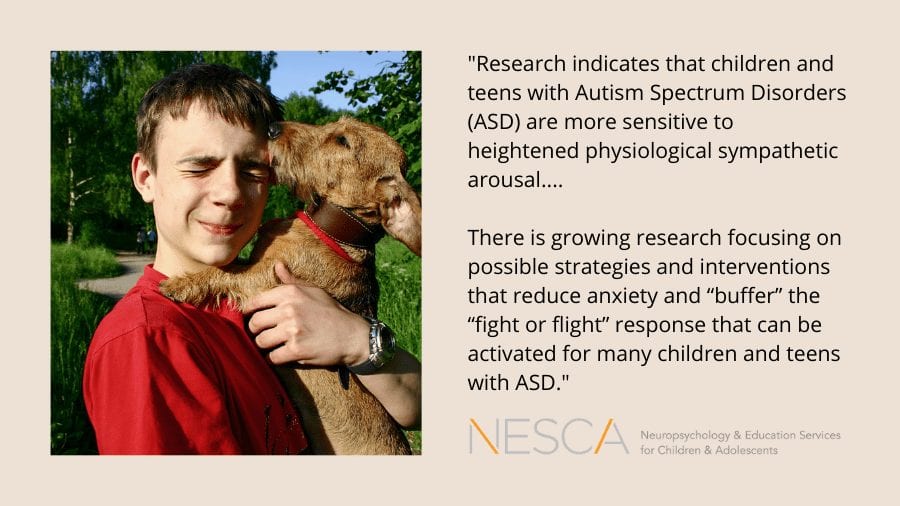
Research indicates that children and teens with Autism Spectrum Disorders (ASD) are more sensitive to heightened physiological sympathetic arousal (the “fight or flight” response), including increased heart rate, breathing rate, feeling “on edge” and body-based tenseness. Heightened physiological arousal is neurologically connected to sensory processing and emotional responses. This is why some children with ASD have “high startle responses” or sensitivities to specific sensations, such as touch or sounds. This is also why some children and teens with ASD are vulnerable to feelings of anxiety, particularly within social situations and settings.

There is growing research focusing on possible strategies and interventions that reduce anxiety and “buffer” the “fight or flight” response that can be activated for many children and teens with ASD.

5 Research-driven Anxiety Reducers:

Animals: Include companion or therapy animals in social groups or social outings (particularly new social events). In one study, children with ASD showed a 43% decrease in skin conductance responses during free play with peers in the presence of animals, as compared to toys (O’Haire, McKenzie, Beck, & Slaughter, 2015).

Exercise: Make a plan to engage in a “warm up” body-based activity right before a social event when anxiety levels are increasing (e.g., jumping jacks, burpees, squats). Research indicates that exercise calms the amygdala and decreases physiological arousal.

Relax or Distract: Practice progressive muscle relaxation (PMR). Recent research has indicated that regular and routine engagement in PMR sessions can be a useful strategy for individuals with ASD. Distract yourself from the anxiety-producing situation for the short term (e.g., count by 3s, name three things you can see and hear in the room, repeat words from your favorite song in your head).

Plan to Take a Break: Children and teens can benefit from having a healthy “escape plan” to take a break from socially-demanding and sensory-demanding settings (e.g., a large event like a play or concert, a college lecture, an interview for a job). Research indicates that “rest breaks” during mentally demanding tasks result in increased alertness, decreased fatigue and heightened relaxation.

Social Stories: Social stories provide the opportunity to practice and prepare for stressful situations, decreasing “fight or flight” responses. Read more about examples and applications of social stories in my colleague, Dr. Erin Gibbons’ previous blog post.


About the Author:

Dr. Renée Marchant provides neuropsychological and psychological (projective) assessments for youth who present with a variety of complex, inter-related needs, with a particular emphasis on identifying co-occurring neurodevelopmental and psychiatric challenges. She specializes in the evaluation of developmental disabilities including autism spectrum disorder and social-emotional difficulties stemming from mood, anxiety, attachment and trauma-related diagnoses. She often assesses children who have “unique learning styles” that can underlie deficits in problem-solving, emotion regulation, social skills and self-esteem.

Dr. Marchant’s assessments prioritize the “whole picture,” particularly how systemic factors, such as culture, family life, school climate and broader systems impact diagnoses and treatment needs. She frequently observes children at school and participates in IEP meetings.

Dr. Marchant brings a wealth of clinical experience to her evaluations. In addition to her expertise in assessment, she has extensive experience providing evidence-based therapy to children in individual (TF-CBT, insight-oriented), group (DBT) and family (solution-focused, structural) modalities. Her school, home and treatment recommendations integrate practice-informed interventions that are tailored to the child’s unique needs.

Dr. Marchant received her B.A. from Boston College with a major in Clinical Psychology and her Psy.D. from William James College in Massachusetts. She completed her internship at the University of Utah’s Neuropsychiatric Institute and her postdoctoral fellowship at Cambridge Health Alliance, a Harvard Medical School teaching hospital, where she deepened her expertise in providing therapy and conducting assessments for children with neurodevelopmental disorders as well as youth who present with high-risk behaviors (e.g. psychosis, self-injury, aggression, suicidal ideation).

Dr. Marchant provides workshops and consultations to parents, school personnel and treatment professionals on ways to cultivate resilience and self-efficacy in the face of adversity, trauma, interpersonal violence and bullying. She is an expert on the interpretation of the Rorschach Inkblot Test and provides teaching and supervision on the usefulness of projective/performance-based measures in assessment. Dr. Marchant is also a member of the American Family Therapy Academy (AFTA) and continues to conduct research on the effectiveness of family therapy for high-risk, hospitalized patients.


To book an evaluation with Dr. Marchant or one of our many other expert neuropsychologists, complete NESCA’s online intake form. Click here to learn more about NESCA’s ASD Diagnostic Clinic.


Neuropsychology & Education Services for Children & Adolescents (NESCA) is a pediatric neuropsychology practice and integrative treatment center with offices in Newton and Plainville, Massachusetts, and Londonderry, New Hampshire, serving clients from preschool through young adulthood and their families. For more information, please email info@nesca-newton.com or call 617-658-9800.


Skip to content